
The latest nationwide survey conducted by Pulse Asia delivers a blunt, uncomfortable truth for the country’s most powerful leaders: public trust is no longer shaped by slogans or alliances—it is now anchored on one unforgiving metric: corruption.
For Vice President Sara Duterte, the verdict from a significant portion of the public is stark. Among those who distrust her, over half point directly to corruption allegations and misuse of funds as the primary reason. This is not a vague dissatisfaction. It is specific, measurable, and deeply consequential. It reflects not just political disagreement, but a perceived breach of fiduciary responsibility—arguably the most serious accusation any public official can face.
Trailing closely behind is another critical factor: perceived threats, destabilizing rhetoric, and political conflict with the administration. Taken together, these form a narrative that is no longer confined to elite discourse or congressional hearings—it has penetrated public consciousness.
This matters profoundly for the ongoing and prospective impeachment efforts in Congress. Impeachment, at its core, is both a legal and political process. Legally, it demands evidence. Politically, it demands legitimacy. And legitimacy, as this survey shows, is already shifting. When a majority of distrust is anchored on corruption, the impeachment narrative gains public resonance, not just procedural momentum.
Meanwhile, for President Ferdinand Marcos Jr., the public delivers a different but equally damning critique. The dominant reason for distrust is not direct involvement in corruption—but the perceived failure to hold anyone accountable for it. In other words, the charge is not theft, but tolerance. Not commission, but omission.
This creates a powerful dual narrative in the public mind:
• One leader is distrusted for alleged direct involvement in corruption.
• The other is distrusted for failing to punish it.
That dynamic is politically combustible.
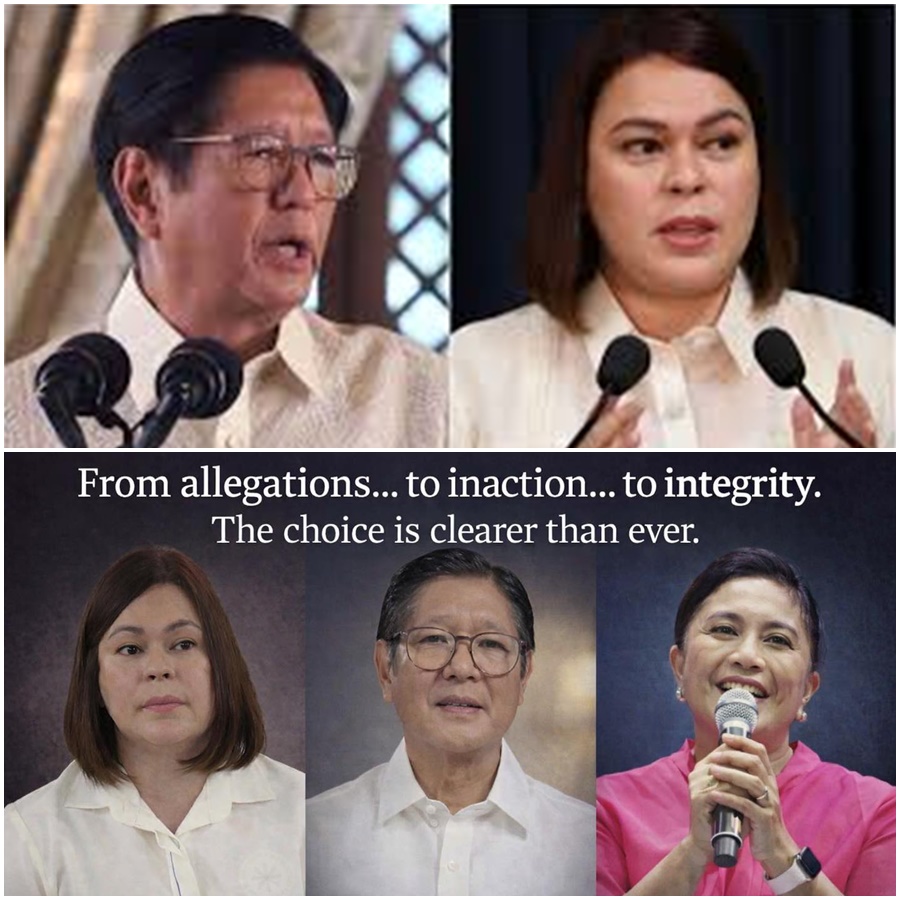
It reveals a deeper structural shift in voter psychology. Filipinos are no longer merely asking “Who is on my side?” They are asking “Who is clean—and who is doing something about those who are not?”
IMPEACHMENT IMPLICATIONS: A SHIFT FROM ELITE PROCESS TO PUBLIC DEMAND
The impeachment case against Sara Duterte, viewed through this lens, is no longer just a legal contest inside the House of Representatives. It is increasingly a referendum on credibility.
For impeachment to succeed politically—even if not immediately legally—it must achieve one thing: convince the public that accountability is necessary and justified.
This survey suggests that groundwork is already laid.
• The 51.5% corruption-driven distrust is not a minor statistic—it is a narrative anchor.
• It provides a clear, communicable, and emotionally resonant basis for impeachment advocates.
• It shifts the debate from partisan attack to public accountability.
If sustained and reinforced with evidence-based messaging, this perception can:
• Increase pressure on legislators
• Reduce political cost of supporting impeachment
• Normalize the idea that removal from office is not destabilization—but correction
2028 ELECTIONS: THE CORRUPTION FAULT LINE
Looking ahead to 2028, this survey is less a snapshot and more a forecast.
It signals that the next presidential election will not primarily be fought on personality, populism, or even economic promises—but on a singular, unifying theme: Who can credibly claim moral authority over corruption?
The electorate is already drawing distinctions:
• Personal accountability (Duterte problem)
• System accountability (Marcos problem)
This creates a rare political opening—one that opposition forces cannot afford to misread or waste.
STRATEGIC ROADMAP FOR THE OPPOSITION
For the opposition blocs—Kakampink, Liberal Party, Akbayan, Magdalo, and allied reform-oriented groups—the data points to a clear, disciplined strategy.
1. Own the Anti-Corruption Narrative—Relentlessly, But Responsibly
The opposition must position itself not as critics, but as custodians of accountability.
• Focus on evidence, audits, documented findings
• Avoid speculation; weaponize verifiable facts
• Translate complex corruption issues into clear, relatable impacts:
○ “This is where your taxes went”
○ “This is what was lost”
2. Unify Messaging: From Fragmentation to Clarity
Fragmentation is the opposition’s historical weakness. The survey shows that voters respond to simple, dominant narratives.
• One message: “Accountability first.”
• One frame: “No one above the law.”
• Multiple voices—but a single storyline
3. Bridge Class and Regional Divides
The data reveals:
• NCR and ABC classes → already critical
• Mindanao and Class E → still persuadable
Strategy must therefore:
• Maintain credibility with the informed sectors
• Build trust with grassroots voters through:
○ local engagement
○ practical, tangible messaging
○ avoidance of elitist tone
4. Turn “System Failure” Into Reform Agenda
Marcos’ vulnerability is systemic perception.
Opposition must:
• Offer concrete reforms:
○ faster prosecution mechanisms
○ transparency systems
○ independent oversight strengthening
• Frame themselves as solution providers, not just critics
5. Humanize Accountability
Data alone does not move voters—stories do.
• Connect corruption to:
○ hospital shortages
○ classroom gaps
○ rising cost of living
• Make accountability personal, not abstract
6. Discipline Over Drama
The temptation to sensationalize must be resisted.
• Credibility wins long-term battles
• Precision beats noise
• Consistency beats virality
THE BOTTOM LINE
This is not just a survey. It is a warning—and an opportunity.
It warns those in power that public patience for corruption—real or perceived—is collapsing.
It offers the opposition a rare opening to redefine the political battlefield around integrity, accountability, and governance.
But opportunities in politics are perishable. Mishandled, they disappear. Misread, they backfire.
Handled with discipline, clarity, and evidence—they can reshape outcomes.
And perhaps, redefine leadership.
News

Tatlong Taon Ko Silang Minake-up Nang Halos Palugi, Tapos Tinawag Nila Akong Manloloko—Pero Sa Araw Ng Cosplay Convention, Nalaman Nila Kung Sino Talaga Ang “Murang” Baguhan
Tatlong taon ko silang ginawang maganda sa harap ng camera. Tatlong taon akong nagpuyat, napaso sa glue gun, nagbayad mula…

Nang Mag-check Out Ako sa Hotel, Pinabayaran sa Akin ang ₱3.8 Milyong Kasal ng Isang Lalaking Hindi Ko Kilala—Akala Nila Madali Akong Takutin, Hanggang Makita Ko ang Pangalan sa Kopya ng ID
Noong umagang mag-check out ako sa hotel sa Tagaytay, ang inaasahan ko lang bayaran ay ₱8,200 para sa tatlong gabing…
Hinamak ng Tita Ko ang Nanay Ko sa Harap ng Buong Pamilya Dahil sa Murang Regalo—Pero Nang Ilabas ni Papa ang Susi ng Kotse, Biglang Natahimik ang Lahat sa Restaurant
Noong gabing iyon, tinawag ng tita ko ang nanay ko na “pabigat” sa harap ng buong angkan. Walang kumibo. Hindi…

Sa Ika-62 Kaarawan ng Nanay Ko, Dinala ng Tatay Ko ang “Anak-Anakan” Niya—Pero Hindi Niya Alam, Labinlimang Taon Nang Tahimik na Inihahanda ni Mama ang Pinakamasakit na Regalo Para sa Kanya
Labinlimang taon nang may kabit ang tatay ko. Hindi lang babae ang itinago niya. May dalawa pa siyang anak sa…

Nanalo Ako ng ₱240 Milyon Pero Nanatiling Hamak na Content Writer—Hanggang Ako ang Unang Bumoto Para Sibakin ang Kalahati ng Kumpanya, Kasama ang Sarili Kong Pangalan sa Listahan
Nanalo ako ng ₱240 milyon sa lotto. Hindi ako bumili ng condo sa BGC.Hindi ako nag-resign.Hindi rin ako nag-post ng…

Pinaalis Ako ng Fiancé Ko Dahil sa “Family Avoidance Rule”—Pero Hindi Niya Alam, Ako ang Gumawa ng Sistemang Nagpapatakbo sa Buong Kumpanya Niya
Noong araw na pinaalis ako ng sarili kong fiancé sa kumpanya, hindi siya nagbigay kahit isang paliwanag. Isang corporate announcement…
End of content
No more pages to load