The Palace did not expect the backlash to move this fast.
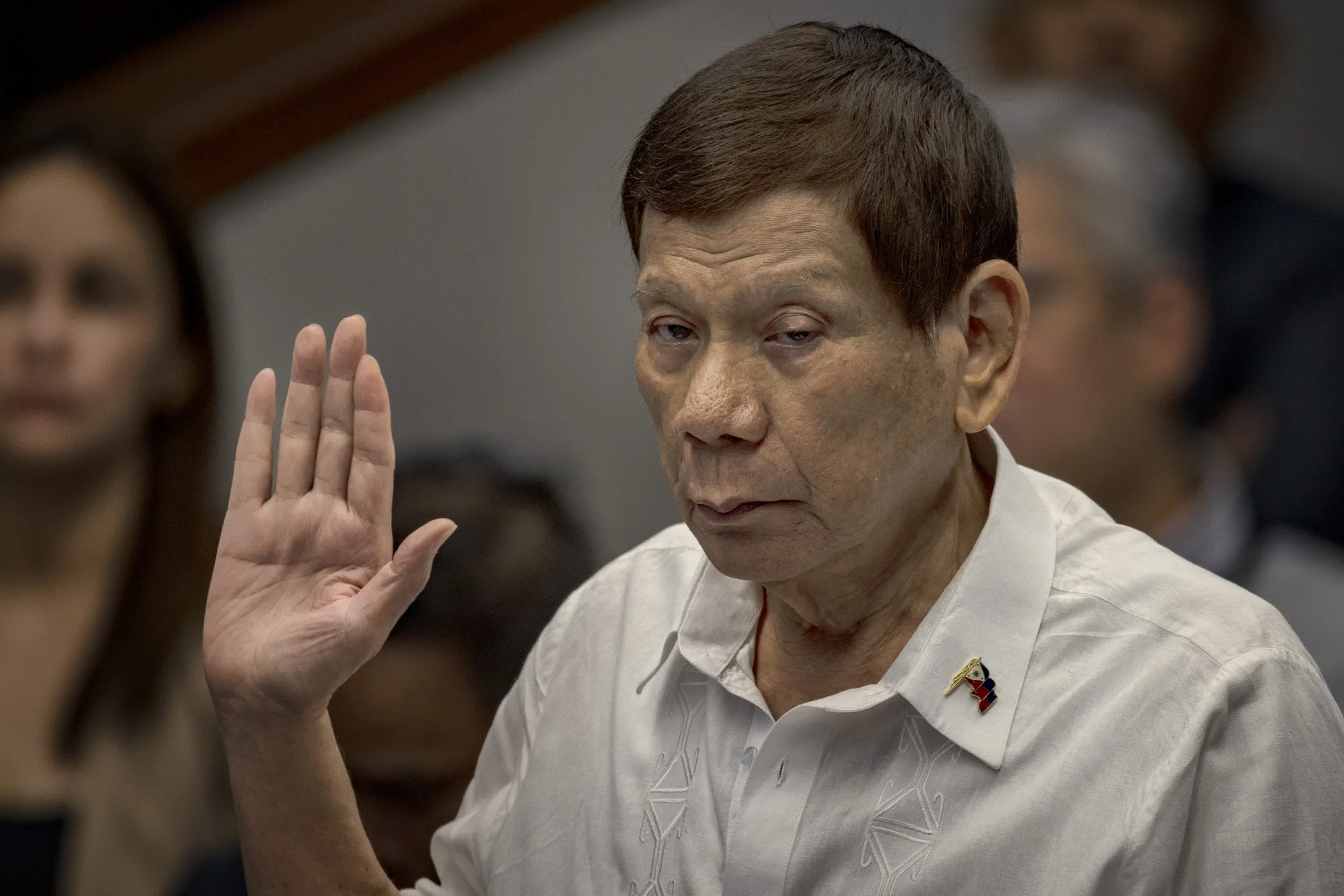
What began as a legal debate over international jurisdiction has now spiraled into a national political firestorm—one that touches sovereignty, loyalty, impeachment threats, and the looming 2028 presidential race.
At the center of it all stand two names that continue to shape Philippine politics: former President Rodrigo Duterte and Vice President Sara Duterte.
And hovering above the unfolding drama is the shadow of the International Criminal Court—a tribunal the Philippines formally withdrew from in 2019, yet one that continues to assert jurisdiction over alleged crimes committed while the country was still a member of the Rome Statute.
Now, after developments that reportedly led to Duterte’s surrender to The Hague in March 2025, the Palace finds itself facing accusations ranging from legal overreach to outright betrayal.
The question reverberating across the country: Did the government uphold the law—or surrender sovereignty?
The Legal Flashpoint: RA 9851 and the ICC
Palace Press Officer Undersecretary Claire Castro defended the government’s position by invoking Republic Act 9851, the Philippine Act on Crimes Against International Humanitarian Law, Genocide, and Other Crimes Against Humanity.
Specifically, Section 17 provides that Philippine authorities may defer to international tribunals under certain conditions.
The Palace’s argument is straightforward: when the Philippines was still a member of the Rome Statute, obligations were incurred. Therefore, cooperation—particularly through mechanisms like Interpol—remains legally defensible.
But critics argue otherwise.
Former Chief Presidential Legal Counsel Salvador Panelo insists that RA 9851 was never intended to “abandon” Filipino citizens to foreign jurisdiction. According to him, the law was crafted to enable domestic prosecution—not to bypass it.
For Panelo, invoking Section 17 to justify surrender is a distortion of legislative intent.
Meanwhile, former Executive Secretary Vic Rodriguez used even stronger language, calling the move “state-sponsored kidnapping” and a violation of national sovereignty.
The rhetoric is explosive.
The implications are heavier still.
Sovereignty vs. International Accountability
The Philippines withdrew from the ICC under Duterte’s administration in 2019. President Bongbong Marcos had publicly stated in 2024 that the country does not recognize ICC jurisdiction, emphasizing that Philippine courts are fully functional and capable of administering justice.
Yet on March 12, 2025, Duterte was reportedly surrendered to the ICC following the issuance of an arrest warrant.
This apparent shift has fueled confusion.
If the Philippines does not recognize ICC authority, why comply with its processes?
Supporters of the surrender argue that jurisdiction applies retroactively to the period when the Philippines was still a state party. Opponents counter that once withdrawn, enforcement mechanisms become politically—not legally—motivated.
This legal gray zone is precisely what has ignited outrage among Duterte loyalists.
The Political Undercurrent: Sara Duterte’s Declaration
As if the ICC controversy were not enough, Vice President Sara Duterte declared her intention to run for president in 2028—more than two years before the election cycle formally begins.
Her announcement was not subtle.
It came with an apology to supporters for helping elect Marcos in 2022, stating that she had witnessed dishonesty in campaign promises.
That apology landed like a thunderclap.
Political observers note that early declarations are rare in Philippine politics, where candidates often delay announcements to avoid early attacks. Yet Sara’s move appears calculated: draw a clear line now, define allies and adversaries, and consolidate her base before the storm intensifies.
Her critics say it is political maneuvering amid impeachment threats.
Her supporters say it is courage under fire.
Either way, it changes the battlefield.
Impeachment and Pressure
Vice President Duterte faces impeachment complaints in the House of Representatives. The timing—coinciding with her presidential declaration and her father’s ICC proceedings—has amplified perceptions of coordinated political pressure.
For her supporters, the narrative is simple: this is political persecution.
For her critics, accountability must proceed regardless of electoral ambitions.
The truth likely lies somewhere in between—where legal processes and political motivations intersect in complex ways.
Palace Reaction: “Good Luck”
When asked about Sara Duterte’s 2028 announcement, President Marcos’ reaction was reportedly brief: “Good luck.”
Was it sincere?
Sarcastic?
Dismissive?
Palace officials declined to elaborate.
But in politics, brevity often speaks volumes.
The once-celebrated “UniTeam” alliance of Marcos and Duterte now appears fractured beyond repair.
What was once marketed as unity now resembles open rivalry.
The Duterte Base Remains Mobilized
Despite controversies, Rodrigo Duterte retains a fiercely loyal base. For many Filipinos, his anti-drug campaign represented decisive leadership in a country weary of criminality.
For others, it raised serious human rights concerns that warrant international scrutiny.
These opposing narratives are not easily reconciled.
And with Sara Duterte stepping forward as a presidential aspirant, the Duterte brand remains very much alive in Philippine politics.
The Question of Bringing Duterte Home
Rumors circulate that efforts are underway to bring Duterte back to the Philippines.
Legal experts caution that once ICC custody is established, processes are lengthy and heavily procedural. Confirmation of charges hearings, pre-trial litigation, and jurisdictional challenges could stretch for years.
Still, symbolic politics matters.
Even the perception of efforts to “bring him home” energizes supporters.
The Broader Stakes
This is no longer just about one former president.
It is about:
The reach of international law
The limits of national sovereignty
The credibility of domestic courts
The fracture of political alliances
And the positioning for 2028
The ICC case has become a litmus test for loyalty and ideology.
Are you for international accountability?
Or for absolute national jurisdiction?
Are you aligned with Marcos?
Or with Duterte?
The middle ground narrows by the day.
Legal Reality vs. Political Theater
Legal scholars note that ICC jurisdiction over alleged crimes committed while a state was a member remains valid under international law principles.
However, enforcement depends heavily on state cooperation.
Thus, the controversy is not purely legal—it is political.
Compliance sends one message.
Resistance sends another.
In either case, reputations are shaped.
What Happens Next?
Several developments are expected:
ICC confirmation of charges proceedings will move forward.
Impeachment processes against Sara Duterte may intensify or stall depending on congressional dynamics.
Political alliances will shift as 2028 approaches.
Public opinion will continue to polarize.
The Palace faces pressure from both international observers and domestic constituents.
Every move now carries electoral consequences.
A Nation at a Crossroads
For ordinary Filipinos, beyond the noise and slogans, the deeper concern remains stability.
Economic challenges persist.
Food prices fluctuate.
Global tensions influence trade and security.
Against this backdrop, high-level political conflict can either clarify leadership—or deepen division.
The Duterte-Marcos split has effectively ended the illusion of seamless continuity from 2022.
What replaces it remains uncertain.
Conclusion: Law, Loyalty, and the Long Road to 2028
The unfolding saga involving Rodrigo Duterte, Sara Duterte, the ICC, and the Palace is not merely headline material.
It is a defining chapter in the Philippines’ democratic evolution.
Will the country assert strict national sovereignty?
Or embrace international legal accountability?
Will the Duterte legacy strengthen through perceived persecution?
Or weaken under judicial scrutiny?
And as 2028 approaches, will voters reward defiance—or demand reconciliation?
For now, the Palace stands under scrutiny.
The court’s rulings ripple outward.
And the Filipino public watches—divided, passionate, and fully aware that history is being written in real time.
News

Hiniling ng Biyenan Kong Ibigay Ko ang Lumang Warehouse Ko Bilang Dowry ng Anak Niya—Pero Nang Malaman Nilang ₱80 Milyon ang Compensation, Doon Lumabas ang Tunay na Mukha ng Pamilyang Pinakasalan Ko
“Anak, nabalitaan ko may binili kang lumang bodega sa may Bulacan ilang taon na ang nakaraan?” Biglang tumahimik ang hapag-kainan….

Bago Kami Pumirma sa Civil Registry, Inamin Kong Buntis Ako sa Ibang Lalaki—Pero Nang Dumating ang Babaeng Pinili Niya Noong Gabing Iniwan Niya Ako, Doon Ko Nalaman na Pareho Kaming Limang Linggo
Sa mismong umaga ng dapat sana’y kasal namin sa papel, iniabot ko kay Rafael Soriano ang ultrasound result ko. Tumingin…

NANG TUMIGIL AKONG MAGING ASAWANG NAGHAHABOL, SAKA NIYA NALAMAN NA ANG BABAENG INIWAN NIYA SA DILIM ANG SIYANG MAY HAWAK NG LAHAT NG KATOTOHANAN
Sa ikatlong taon mula nang makalabas ako sa pribadong psychiatric ward sa Tagaytay, sa wakas naging eksakto na akong asawa…

Bago Kami Magpakasal, Narinig Ko Sa Livestream Ng Isang Abogada Na Ang Nobyo Ko Ay Niloloko Ako—At Ang Kabit Niya Ay Ang Matalik Kong Kaibigan Na Tinulungan Ko Sa Lahat
Isang gabi bago kami magpa-rehistro ng kasal, nalaman kong peke pala ang appointment namin sa Civil Registry. Hindi mula sa…

Tatlong Taon Ko Silang Minake-up Nang Halos Palugi, Tapos Tinawag Nila Akong Manloloko—Pero Sa Araw Ng Cosplay Convention, Nalaman Nila Kung Sino Talaga Ang “Murang” Baguhan
Tatlong taon ko silang ginawang maganda sa harap ng camera. Tatlong taon akong nagpuyat, napaso sa glue gun, nagbayad mula…

Nang Mag-check Out Ako sa Hotel, Pinabayaran sa Akin ang ₱3.8 Milyong Kasal ng Isang Lalaking Hindi Ko Kilala—Akala Nila Madali Akong Takutin, Hanggang Makita Ko ang Pangalan sa Kopya ng ID
Noong umagang mag-check out ako sa hotel sa Tagaytay, ang inaasahan ko lang bayaran ay ₱8,200 para sa tatlong gabing…
End of content
No more pages to load