
March 27, 2026
On March 25, 2026, Senator Imee Marcos delivered a sharply worded rebuke against the House of Representatives, accusing lawmakers of being “blinded by revenge and greed for power” for proceeding with impeachment hearings against Vice President Sara Duterte amid a worsening fuel crisis. Her framing is emotionally potent, politically calculated, and—upon scrutiny—fundamentally flawed.
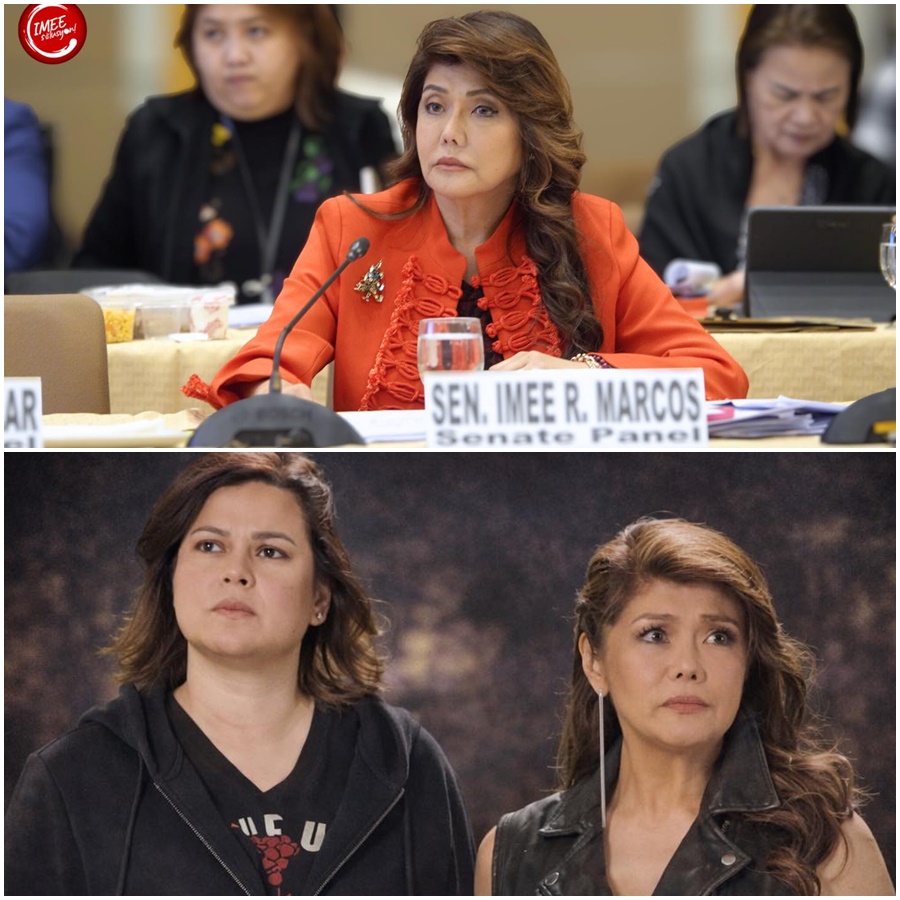
It is a narrative built on urgency, but sustained by a dangerous premise: that crisis should suspend accountability.
That premise does not survive contact with constitutional reality.
At the center of this controversy is not rhetoric, but process. The impeachment complaints against Duterte did not materialize overnight, nor were they casually entertained. They have already passed critical constitutional thresholds—deemed sufficient in form, substance, and grounds—advancing into the evidentiary phase. This is not political noise; this is institutional procedure operating exactly as designed.
To dismiss this process as “pamumulitika” is not merely inaccurate—it is a direct attempt to delegitimize one of the Constitution’s most essential accountability mechanisms.
Because impeachment is not a distraction from governance.
It is governance.
The argument advanced by Marcos hinges on a false dichotomy: that government must choose between addressing a national crisis and enforcing accountability. It is a persuasive line—until examined.
As political analyst Ronald Llamas incisively points out, this logic collapses instantly when applied consistently. Should law enforcement stop arresting criminals because fuel prices are high? Should courts suspend trials because inflation is rising? Should oversight vanish because governance is difficult?
Of course not.
The rule of law is not conditional. It does not pause for convenience, nor does it yield to political discomfort. It exists precisely for moments like this—when power is under scrutiny and pressure is high.
If anything, crises heighten the need for accountability. They do not diminish it.
Marcos’ appeal to public suffering—drivers unable to operate, farmers struggling with rising costs—is real. The hardship is undeniable. But invoking that suffering to shield a public official from legal scrutiny is where the argument turns from empathetic to exploitative.
Because the Filipino people are not being asked to choose between relief and accountability.
They are being told—incorrectly—that they must.
This is the core deception.
Governments are not single-threaded entities. Congress does not cease functioning because multiple responsibilities exist. Legislative bodies are designed to legislate, investigate, and oversee simultaneously. To suggest otherwise is to reduce governance to a caricature—one that conveniently excuses scrutiny.
More critically, the “crisis-first” narrative begins to unravel when examined alongside actual policy responses.
While allies of Duterte decry impeachment as a distraction, concrete solutions to the oil crisis have in fact been proposed—clearly, specifically, and at scale. Senator Risa Hontiveros has outlined a structured response framework: billions in targeted fuel subsidies, emergency assistance funds, and administrative reforms to accelerate aid delivery.
These are not slogans. They are actionable policies.
This is the crucial contrast.
On one side: measurable interventions grounded in economic realities.
On the other: rhetorical outrage framing accountability as inconvenience.
If anything, it is not the impeachment process that reflects misplaced priorities—it is the substitution of policy with political theater.
Equally revealing is the broader pattern identified by commentators like Lovely Granada, who has openly questioned whether supporters are being fed narratives that collapse under scrutiny simply to preserve political image. When complex issues are reduced to emotionally charged binaries—“crisis vs impeachment,” “service vs politics”—the public discourse is not being clarified; it is being manipulated.
Because the reality is more demanding.
It requires the public to hold two truths at once: that economic hardship must be addressed urgently, and that allegations of misconduct at the highest levels of government must be investigated thoroughly.
These are not competing obligations.
They are parallel duties.
At its core, the impeachment case against Duterte involves serious allegations—misuse of public funds, abuse of authority, and breaches of public trust. These are not trivial matters that can be deferred without consequence. Public office is built on fiduciary responsibility. When that trust is questioned, the response cannot be delay—it must be scrutiny.
To postpone accountability under the pretext of crisis is to establish a dangerous precedent: that power can evade examination precisely when conditions are most volatile.
History shows where that leads.
Not to stability—but to impunity.
There is also a deeper political calculation embedded in Marcos’ statement. By framing impeachment as persecution and aligning with Duterte, she is not merely defending a colleague—she is reinforcing factional lines in an increasingly polarized political landscape heading toward 2028.
But political alignment does not override constitutional obligation.
No alliance is above accountability.
No crisis is sufficient justification to weaken the mechanisms designed to protect the public from abuse.
And here lies the most consequential implication.
If accountability is postponed today, it becomes negotiable tomorrow.
If it becomes negotiable tomorrow, it becomes optional thereafter.
And once accountability becomes optional, impunity becomes systemic.
That is the real risk—not impeachment proceedings, but the normalization of excuses against them.
The Filipino people deserve better than rhetorical deflection. They deserve governance that is both responsive and responsible—capable of addressing economic crises while upholding the rule of law without compromise.
They deserve leaders who do not weaponize hardship to shield power.
They deserve a political discourse that respects their intelligence, rather than attempting to corner them into false choices.
In the end, Senator Marcos’ statement is not just a critique of timing—it is a test of principle.
And on that test, the Constitution is clear:
Accountability is not optional.
It is not seasonal.
It is not negotiable.
It is the foundation of democracy itself.
News

Tatlong Taon Ko Silang Minake-up Nang Halos Palugi, Tapos Tinawag Nila Akong Manloloko—Pero Sa Araw Ng Cosplay Convention, Nalaman Nila Kung Sino Talaga Ang “Murang” Baguhan
Tatlong taon ko silang ginawang maganda sa harap ng camera. Tatlong taon akong nagpuyat, napaso sa glue gun, nagbayad mula…

Nang Mag-check Out Ako sa Hotel, Pinabayaran sa Akin ang ₱3.8 Milyong Kasal ng Isang Lalaking Hindi Ko Kilala—Akala Nila Madali Akong Takutin, Hanggang Makita Ko ang Pangalan sa Kopya ng ID
Noong umagang mag-check out ako sa hotel sa Tagaytay, ang inaasahan ko lang bayaran ay ₱8,200 para sa tatlong gabing…

Hinamak ng Tita Ko ang Nanay Ko sa Harap ng Buong Pamilya Dahil sa Murang Regalo—Pero Nang Ilabas ni Papa ang Susi ng Kotse, Biglang Natahimik ang Lahat sa Restaurant
Noong gabing iyon, tinawag ng tita ko ang nanay ko na “pabigat” sa harap ng buong angkan. Walang kumibo. Hindi…

Sa Ika-62 Kaarawan ng Nanay Ko, Dinala ng Tatay Ko ang “Anak-Anakan” Niya—Pero Hindi Niya Alam, Labinlimang Taon Nang Tahimik na Inihahanda ni Mama ang Pinakamasakit na Regalo Para sa Kanya
Labinlimang taon nang may kabit ang tatay ko. Hindi lang babae ang itinago niya. May dalawa pa siyang anak sa…

Nanalo Ako ng ₱240 Milyon Pero Nanatiling Hamak na Content Writer—Hanggang Ako ang Unang Bumoto Para Sibakin ang Kalahati ng Kumpanya, Kasama ang Sarili Kong Pangalan sa Listahan
Nanalo ako ng ₱240 milyon sa lotto. Hindi ako bumili ng condo sa BGC.Hindi ako nag-resign.Hindi rin ako nag-post ng…

Pinaalis Ako ng Fiancé Ko Dahil sa “Family Avoidance Rule”—Pero Hindi Niya Alam, Ako ang Gumawa ng Sistemang Nagpapatakbo sa Buong Kumpanya Niya
Noong araw na pinaalis ako ng sarili kong fiancé sa kumpanya, hindi siya nagbigay kahit isang paliwanag. Isang corporate announcement…
End of content
No more pages to load