
In a drama-laden confrontation that unfolded before cameras and microphones, a group of former servicemen collectively known as the “18 Marines” stood shoulder to shoulder and declared they were ready to fight—not on a battlefield, but in court. Across the aisle stands former senator Antonio Trillanes IV, who has filed criminal complaints and denounced the allegations against him as fabricated, malicious, and politically driven.
What began as whispers of suitcases, paper bags, and late-night deliveries has now escalated into formal cases before the Department of Justice. The clash pits former uniformed men—some retired, some controversially discharged—against a figure long associated with reformist rhetoric and anti-corruption crusades.
The question gripping the public: Who is telling the truth?
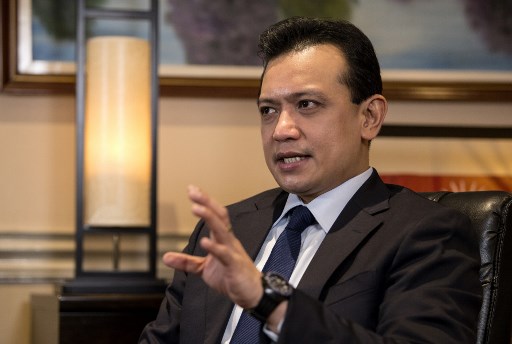
A Press Conference Charged with Emotion
The press conference was not merely procedural. It was personal.
One by one, members of the group identified themselves before reporters, some reluctantly revealing their names despite citing security concerns for their families. Several declared they were former members of the Philippine Marines; others clarified they were from the Army or other branches. The label “18 Marines,” they explained, is a collective term—an identifier born from repetition in media coverage rather than a literal roster.
Their message was consistent: they insist they witnessed or participated in the delivery of large sums of money tied to alleged anomalies in flood control projects. They claim their statements are truthful, sworn, and backed by affidavits.
For them, this is not politics—it is conscience.
Trillanes Fights Back
Antonio Trillanes IV, known for his history as a former Navy officer and outspoken critic of multiple administrations, has taken a firm stand. He filed criminal complaints against lawyer Ferdinand Topacio Baligod and others linked to the accusations, asserting that the claims are baseless and defamatory.
Trillanes argues that the proper forum for such serious allegations is the courtroom—not viral press briefings or social media speculation. He maintains that he has nothing to hide and welcomes a formal, evidence-based investigation.
In his view, the public narrative has been manipulated to create spectacle rather than substance.
The Suitcases and the Paper Bags
At the heart of the controversy are claims of deliveries: suitcases allegedly filled with money, paper bags handed over at private residences, meetings in townhouses and secure locations.
During the press conference, one former driver recounted his alleged role in transporting items to various addresses, including properties associated with high-profile political figures. He described scenarios in which money was counted before being loaded into vehicles. He insisted he knew the contents were cash, having seen it prepared prior to delivery.
Yet under questioning, ambiguities surfaced.
Did he personally see the contents of every suitcase?
Was he present during each counting session?
Were the locations definitively identified and verified?
These gaps form the crux of Trillanes’ rebuttal: allegations without incontrovertible proof are not enough to convict in the court of law—or public opinion.
The Credibility Battle
The conflict has evolved into a war over credibility.
Critics of the former Marines have highlighted that not all 18 are Marines by service record. Some were discharged under less-than-honorable circumstances. Others come from different branches of the armed forces.
Supporters of the group counter that such details are distractions—ad hominem tactics meant to deflect attention from the substance of their claims. They argue that whether a man left the service voluntarily, retired honorably, or was discharged does not automatically invalidate his testimony.
The group has bristled at attempts to reduce them to labels. They insist that the issue is not their past, but the alleged misuse of public funds.
One member remarked pointedly: “This is about corruption, not about our biographies.”
Political Undercurrents
Inevitably, partisan undertones have colored the discourse.
Some commentators have framed the issue as a proxy battle between political factions—between allies and critics of Bongbong Marcos, between reformists and loyalists, between those aligned with the previous Duterte administration and its opponents.
The former Marines deny being pawns of any political bloc. They insist they are “neutral,” motivated solely by a desire to expose anomalies in government projects.
But neutrality in Philippine politics is often a contested claim. Allegiances are scrutinized. Motives are dissected. Every statement is filtered through the lens of factional rivalry.
The Ombudsman and the DOJ
The involvement of the Department of Justice adds institutional weight to the dispute. Filing criminal complaints moves the matter beyond rhetoric.
Observers now watch closely: Will prosecutors find sufficient basis to pursue charges? Will countercharges escalate? Will the Ombudsman initiate parallel inquiries?
The legal process promises cross-examination under oath—a setting where inconsistencies, if any, can be exposed definitively.
For the 18 former servicemen, this represents an opportunity to validate their testimony. For Trillanes, it offers a venue to dismantle what he calls falsehoods.
The Flood Control Factor
Repeated references to flood control projects have drawn attention to a broader issue: infrastructure spending and alleged anomalies in public works.
Flood control budgets in the Philippines run into billions annually, especially as climate change intensifies typhoon seasons. If funds were indeed diverted, the consequences would extend far beyond politics—they would affect vulnerable communities relying on protective infrastructure.
However, as of now, no publicly verified audit has confirmed the alleged diversions described by the former Marines.
The accusations remain claims awaiting evidentiary substantiation.
Debt and Distrust
Beyond individual allegations lies a deeper frustration voiced during the press event: national debt and perceived stagnation.
Speakers lamented that despite heavy borrowing, visible improvements in infrastructure and public welfare remain elusive. They painted a picture of a country weighed down by obligations while citizens struggle with economic pressures.
This broader narrative resonates with segments of the public who feel disconnected from the promised fruits of government spending.
Whether or not the ₱805-billion allegations withstand scrutiny, the emotional undercurrent is clear: distrust in institutions is fertile ground for explosive claims.
The Role of Digital Platforms
The press conference also doubled as a promotional platform for a citizen-led website advocating “good governance.” The initiative encourages users to upload evidence, rate public officials, and build a database assessing trustworthiness.
Supporters view it as participatory democracy. Critics caution that crowdsourced allegations, if not rigorously verified, can amplify misinformation.
In an era where viral narratives spread faster than court rulings, digital ecosystems shape political reality as much as official proceedings.
The “Dishonorable Discharge” Debate
One contentious exchange centered on whether being dishonorably discharged from service undermines credibility.
The former Marines rejected the notion. Personal service records, they argued, have no bearing on whether money changed hands in alleged transactions. They pointed out that individuals previously dismissed from institutions have still been entrusted with public roles.
This argument touches on a philosophical question: Is credibility rooted in past conduct, present evidence, or both?
In court, character may inform perception—but documentation determines verdicts.
Security Concerns and Fear
Several members cited fear for their families’ safety. They described the risks of confronting powerful interests. They framed their appearance not as a political maneuver but as a moral stand.
Such statements evoke sympathy—but they also raise questions.
Are these fears substantiated by threats?
Or are they anticipatory, born from the high-stakes nature of political whistleblowing?
Without independent confirmation, the public must navigate between empathy and skepticism.
A Nation Watching
The Philippines has witnessed countless political clashes where accusations flew, hearings were convened, and outcomes remained ambiguous.
This case may follow a similar trajectory—or it may culminate in definitive legal conclusions.
For now, it stands as a microcosm of Philippine democracy: noisy, polarized, emotionally charged, yet still anchored in formal institutions capable of adjudication.
What Happens Next?
If Senate or House investigations proceed, the 18 former servicemen have pledged to attend. Trillanes has signaled readiness to confront the allegations head-on.
The Department of Justice must determine whether probable cause exists. Evidence will be weighed. Testimonies scrutinized.
The spectacle of press conferences will give way to the slower, more methodical rhythm of legal procedure.
And therein lies the ultimate test: can claims forged in the heat of public emotion survive the cold light of evidentiary standards?
Beyond the Headlines
Strip away the slogans, the social media calls to action, and the partisan jabs, and the core issue remains stark.
Either:
A coordinated group of former servicemen is fabricating a massive corruption narrative; or
A web of financial irregularities involving influential figures demands urgent accountability.
There is little room for middle ground.
The stakes are enormous—not only for Trillanes and the 18 former servicemen, but for public trust in governance.
Conclusion: Between Allegation and Accountability
In democracies, accusations must not be silenced—but neither can they substitute for proof.
The confrontation between Antonio Trillanes IV and the so-called 18 Marines embodies this tension. It is a battle of affidavits, credibility, and competing narratives.
For citizens weary of corruption scandals, the desire for truth is urgent.
For institutions tasked with upholding justice, patience and procedure are paramount.
As the legal process unfolds, one truth endures: democracy’s strength is measured not by the absence of controversy, but by its ability to confront controversy through transparent and lawful means.
The cameras may dim. The press conference banners may be folded away.
But in courtrooms and committee halls, the real reckoning is only beginning.
News
Sa Gabi ng Aking Kasal, Iniwan Ako ng Asawa Ko Para sa Kanyang Kababata—Pero Hindi Niya Alam, Isang Mensahe Ko Lang ang Babagsak sa Kanyang Pamilya, sa Kanyang Imperyo, at sa Lihim ng Aking Ina
Sa buong Forbes Park, kilala ako bilang babaeng marunong ngumiti kahit sinasaksak na sa harap ng hapag-kainan. Tahimik. Magalang. Anak-mayaman…

Noong Bisperas ng Bagong Taon, Isinugod Ako ng Asawa Ko sa Ospital Nang Pumutok ang Panubigan Ko—Ngunit sa Likod ng Kotse, Natagpuan Ko ang Patunay na Ang Tatay ng Anak Ko ay Matagal Nang Nawala sa Amin
Noong Bisperas ng Bagong Taon, pumutok ang panubigan ko habang nagpapaputok ang buong barangay sa labas. Hindi na nagsapatos ang…

Akala Nila Isa Lang Akong Probinsyanang Pulot sa Kalsada—Hanggang sa Mismong Reception ng Pamilyang Dela Cruz, Pinahiya Ako ng Pekeng Anak… at Sa Harap ng Isang Amerikanong Investor, Nabunyag Kung Sino Talaga ang Henyo
Mahilig akong umarte mula pagkabata. Noong sanggol pa lang ako, kaya ko nang magsalita. Pero masyadong ordinaryo iyon. Kaya tumahimik…

Isang Buwan Matapos ang Diborsyo, Nalaman Kong Buntis Ako ng Triplets—At Nang Malaman ng Pamilya ng Ex-Husband Ko, Doon Nila Naintindihan Kung Sino Talaga ang Itinapon Nila
Isang buwan matapos akong hiwalayan ng asawa ko para sa babaeng minahal niya noon, nalaman kong buntis ako. Hindi isa….
Ibinenta ng Asawa Ko ang Lumang Bahay Para sa Luho ng Kapatid Niya—Pero Hindi Niya Alam na Ako ang Lihim na Bumili Nito Bago Lumabas ang ₱3.2 Milyong Bayad sa Demolisyon
Noong una akong namatay, hindi ako inilibing ng sarili kong pamilya. Iniwan nila ako sa ibang bansa, sa isang malamig…

Noong Pumasa Ako sa UP Diliman, Tinawag Niya Akong Gastos Lang Dahil Babae Ako — Hanggang Ilabas ni Mama ang Lihim na Dokumentong Nagpatunay Kung Kanino Talaga Nakapangalan ang Bahay, Kumpanya, at Milyon-Milyong Perang Pinag-aagawan Nila
Noong araw na lumabas ang admission letter ko mula sa University of the Philippines Diliman, akala ko iyon na ang…
End of content
No more pages to load