
In the fevered theater of Philippine politics, where accusations fly faster than official statements and social media amplifies every whisper into a roar, a new controversy has erupted—messy, explosive, and thick with intrigue. At the center of it are familiar names: Benny Abante, Ping Lacson, and Antonio Trillanes IV—figures long accustomed to political crossfire. But this time, the allegations cut deeper, reaching into the ranks of former marines, implicating lawmakers, and even brushing against the shadow of the International Criminal Court.
The atmosphere is electric. The rhetoric is combustible. And the nation watches.
The Suitcases That Sparked a Storm
It began with a claim—dramatic, cinematic in detail. A former Marine, Master Sergeant Orle Gotesa, allegedly described pushing trolley carts stacked with sealed suitcases. Inside, according to the circulating affidavit, was cash—massive amounts of it—delivered to lawmakers.
The image alone is enough to set imaginations ablaze: choppers ferrying cargo, townhouses in exclusive enclaves, names whispered in corridors of power. Among those mentioned in online discussions and political commentary was Pastor and Congressman Benny Abante, a man whose dual identity as preacher and lawmaker has long made him a visible moral voice in Congress.
Abante categorically denied the accusation.
“The claim that I accepted suitcases of cash is false, baseless, and malicious,” he said in response to the swirling controversy.
Yet denial has done little to cool public speculation. The controversy gained traction not because of proof presented in court, but because of the narrative power of the allegation itself. A suitcase filled with money is a symbol too potent to ignore.
The “List” and the Politics of Implication
What inflamed tensions further was talk of a “list”—a supposed roster of names contained in a joint affidavit. Some commentators claimed Abante was “number one.” Others speculated about initials, blocked-out names, or alphabetic clues.
Social media did what it does best: it filled in the blanks.
Names of various lawmakers circulated online, some connected to luxury addresses, others to alleged townhouse deliveries. The narrative grew larger than any single document. It became a public spectacle—half investigation, half political blood sport.
But here lies the danger.
In a democracy governed by rule of law, allegations—no matter how sensational—require evidence, due process, and impartial investigation. Lists alone do not convict. Affidavits alone do not determine guilt. Yet public perception can be unforgiving.
Enter Ping Lacson: The Credibility Question
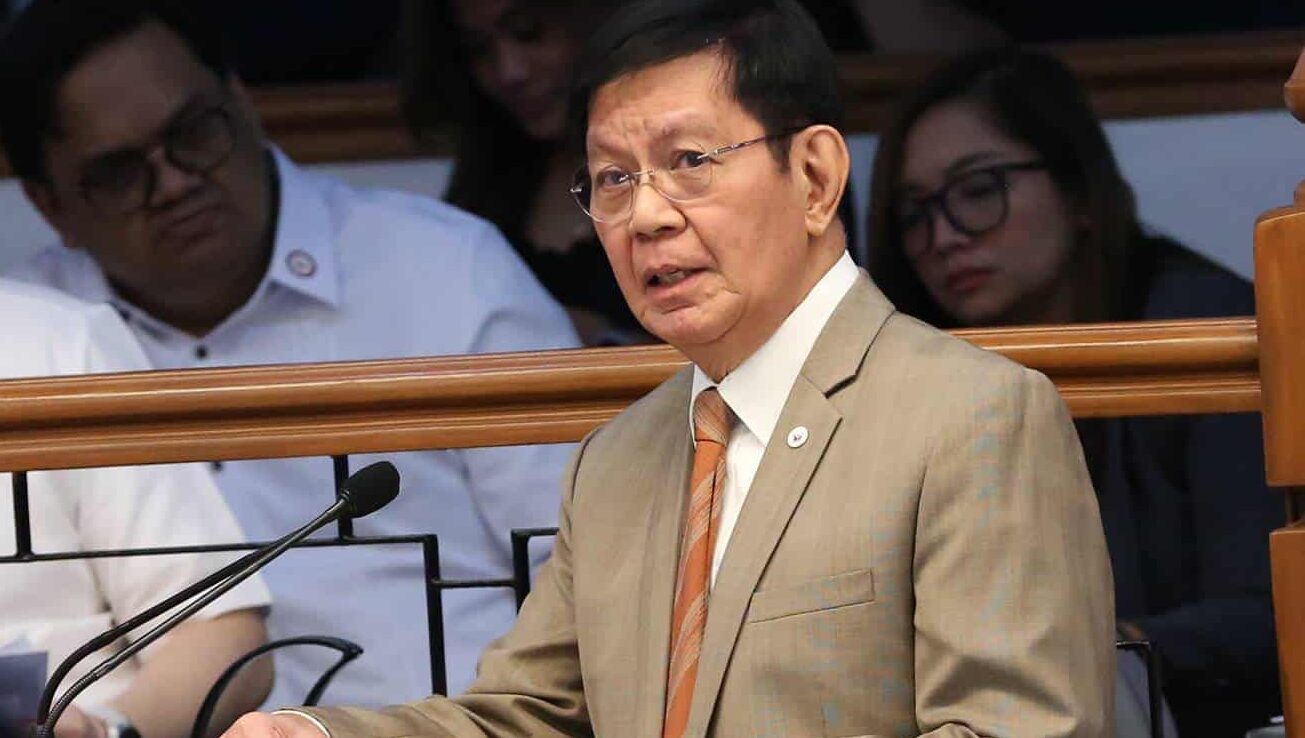
Veteran senator Ping Lacson, known for his law enforcement background, weighed in cautiously. Rather than embracing or dismissing the claims outright, Lacson emphasized two critical questions:
What is the credibility of the source?
What is the reliability of the information?
For Lacson, the issue is not merely whether the allegations are shocking—it is whether they withstand scrutiny.
He reportedly requested official verification from the Philippine Navy and Army regarding the backgrounds of the 18 former marines mentioned in the controversy. Early information suggested some were honorably discharged; others may never have been members at all.
In other words, before accepting the story, establish the credentials of those telling it.
Critics argue that such verification could intimidate whistleblowers. Supporters counter that credibility assessment is standard investigative procedure. Either way, Lacson’s intervention reframed the debate from emotional outrage to institutional process.
The ₱805 Billion Question
Complicating matters further is the staggering figure cited in the controversy: ₱805 billion allegedly linked to appropriations over several years.
The number is so large it risks abstraction. To contextualize, total flood control appropriations from 2023 to 2025 reportedly reached over ₱1.13 trillion. If ₱805 billion were tied to a single lawmaker’s influence, it would represent roughly 70 percent of that allocation.
That arithmetic alone raises skepticism.
But critics argue the money need not come solely from flood control. The chairperson of the House appropriations committee oversees allocations across agencies—education, health, agriculture, infrastructure, and more. Funds move through vast bureaucratic pipelines. Determining origin requires forensic accounting, not speculation.
The debate underscores a deeper concern: the Philippines’ chronic struggle with transparency in public spending. Whether or not the current allegations hold, public distrust of budget processes provides fertile ground for explosive narratives.
Trillanes and the ICC Dimension
The controversy widened when former senator Antonio Trillanes IV was drawn into the discussion. He denied allegations that he received $2 million from individuals connected to International Criminal Court (ICC) proceedings.
The ICC, headquartered in The Hague, has been examining cases linked to former President Rodrigo Duterte and the deadly anti-drug campaign that defined his administration.
Trillanes confirmed that since 2017, he has been in contact with ICC representatives regarding documentation and witness coordination—but firmly rejected claims of bribery.
He described the accusations as attempts to discredit the ICC process and derail ongoing legal scrutiny. In response, he vowed to file cyber libel cases against individuals who publicly repeated the bribery claim.
The timing, he suggested, was no coincidence.
According to Trillanes, the allegations resurfaced just as ICC proceedings gained momentum—an attempt, he argued, to muddy the waters and intimidate witnesses.
A Nation Divided
The Philippines is no stranger to political polarization. Yet this episode illustrates how swiftly public discourse can fracture into camps.
One side sees brave former marines risking everything to expose systemic corruption.
The other sees a destabilization attempt—timed strategically, amplified theatrically, and lacking substantiated proof.
Supporters of the accused demand presumption of innocence and formal investigation. Critics insist that whistleblowers deserve protection and serious attention.
Between these poles lies the Filipino public—fatigued by scandal, yet hungry for accountability.
The Role of Media and Digital Amplification
The speed at which this story spread reflects the modern information ecosystem. Online platforms transformed affidavits into viral headlines. Commentary channels added dramatic narration. Clips circulated with provocative captions: “NALOKO NA!” “UNA SA LISTAHAN!”
The performative intensity of digital commentary can blur the line between investigation and entertainment.
In such an environment, outrage often precedes verification. The emotional hook—“What color was your suitcase?”—becomes more memorable than policy analysis.
Yet democracy depends not on spectacle, but on institutions.
Due Process in the Age of Viral Justice
There is a tension at the heart of this saga: the public’s right to know versus the accused’s right to due process.
Whistleblowers are essential in exposing wrongdoing. But unverified allegations can also destroy reputations irreversibly.
Investigations must determine:
Were deliveries made?
If so, what were their contents?
Who authorized them?
What public funds, if any, were involved?
These are questions for forensic auditors, prosecutors, and courts—not trending hashtags.
The Political Undercurrents
Observers note that the controversy unfolds against a backdrop of shifting alliances and looming electoral battles. The Philippines’ political landscape is fluid; former allies become rivals overnight.
Mentions of impeachment proceedings, ICC investigations, and high-profile personalities intertwine. It is difficult to disentangle genuine whistleblowing from strategic positioning.
In politics, timing is rarely accidental.
What Happens Next?
Several pathways lie ahead:
Formal Investigation: Congressional or judicial bodies may initiate inquiries into the affidavit’s claims.
Cyber Libel Cases: Trillanes’ threatened lawsuits could test the legal consequences of public accusations.
Institutional Verification: The Armed Forces’ confirmation of the marines’ service records may shape public trust in the claims.
Public Fatigue: The story may fade without resolution—another chapter in a long history of unresolved controversies.
The outcome depends on evidence.
The Question That Lingers
Beyond the noise, one question lingers like an echo: If wrongdoing occurred, will the system expose it? And if the accusations are false, will reputations be restored with equal intensity?
The Philippines stands at a crossroads familiar yet urgent. Corruption allegations are not new. Political drama is not rare. But the stakes remain high because public trust—once eroded—is difficult to rebuild.
The controversy surrounding Benny Abante, Ping Lacson, Antonio Trillanes IV, and unnamed former marines is more than a headline. It is a test of institutions, of media responsibility, and of democratic resilience.
In the end, the truth—whatever it may be—will not be found in viral clips or rhetorical flourishes. It will be found in documents, testimonies, audits, and courts.
Until then, the nation waits.
And the question—half accusation, half metaphor—continues to resonate:
What color was the suitcase?
News

Hiniling ng Biyenan Kong Ibigay Ko ang Lumang Warehouse Ko Bilang Dowry ng Anak Niya—Pero Nang Malaman Nilang ₱80 Milyon ang Compensation, Doon Lumabas ang Tunay na Mukha ng Pamilyang Pinakasalan Ko
“Anak, nabalitaan ko may binili kang lumang bodega sa may Bulacan ilang taon na ang nakaraan?” Biglang tumahimik ang hapag-kainan….

Bago Kami Pumirma sa Civil Registry, Inamin Kong Buntis Ako sa Ibang Lalaki—Pero Nang Dumating ang Babaeng Pinili Niya Noong Gabing Iniwan Niya Ako, Doon Ko Nalaman na Pareho Kaming Limang Linggo
Sa mismong umaga ng dapat sana’y kasal namin sa papel, iniabot ko kay Rafael Soriano ang ultrasound result ko. Tumingin…

NANG TUMIGIL AKONG MAGING ASAWANG NAGHAHABOL, SAKA NIYA NALAMAN NA ANG BABAENG INIWAN NIYA SA DILIM ANG SIYANG MAY HAWAK NG LAHAT NG KATOTOHANAN
Sa ikatlong taon mula nang makalabas ako sa pribadong psychiatric ward sa Tagaytay, sa wakas naging eksakto na akong asawa…

Bago Kami Magpakasal, Narinig Ko Sa Livestream Ng Isang Abogada Na Ang Nobyo Ko Ay Niloloko Ako—At Ang Kabit Niya Ay Ang Matalik Kong Kaibigan Na Tinulungan Ko Sa Lahat
Isang gabi bago kami magpa-rehistro ng kasal, nalaman kong peke pala ang appointment namin sa Civil Registry. Hindi mula sa…

Tatlong Taon Ko Silang Minake-up Nang Halos Palugi, Tapos Tinawag Nila Akong Manloloko—Pero Sa Araw Ng Cosplay Convention, Nalaman Nila Kung Sino Talaga Ang “Murang” Baguhan
Tatlong taon ko silang ginawang maganda sa harap ng camera. Tatlong taon akong nagpuyat, napaso sa glue gun, nagbayad mula…
Nang Mag-check Out Ako sa Hotel, Pinabayaran sa Akin ang ₱3.8 Milyong Kasal ng Isang Lalaking Hindi Ko Kilala—Akala Nila Madali Akong Takutin, Hanggang Makita Ko ang Pangalan sa Kopya ng ID
Noong umagang mag-check out ako sa hotel sa Tagaytay, ang inaasahan ko lang bayaran ay ₱8,200 para sa tatlong gabing…
End of content
No more pages to load