Lina Gavierre had always believed that fame was a river—beautiful from afar, powerful up close, and dangerous once you stepped too deep. She entered the independent-film scene young, full of spirit, ready to prove that she had more than a pretty face. Her roles were intense, emotional, and brave, earning her attention from viewers who admired her sincerity.
But with recognition came a shadow that followed her everywhere: speculation.
By her third year in the industry, Lina had learned to live with whispers—whispers about her co-workers, about her life off-camera, about every small decision she made. Nothing, however, compared to the storm that would soon fall on her life.
It began on a quiet Wednesday night.
Lina had just returned home after a long day of shooting a new drama. Her eyes were tired, her shoulders heavy, and her thoughts tangled with the lines she had repeated dozens of times in front of the camera. She wanted nothing but warm food and sleep.
But her phone buzzed non-stop.
At first, she ignored it, thinking it was simply her fan group sharing edits or updates. After the fifth vibration, she decided to glance at the screen.
Her heart stopped.
“BREAKING: Actress Lina Gavierre allegedly facing tragedy after dispute with boyfriend.”
“Unverified posts claim Lina’s condition is serious—family silent.”
“Is Lina safe? What really happened behind closed doors?”
The messages came like arrows—cold, fast, and unexpected. Within minutes, hundreds of posts appeared across social channels. Some expressed concern, others spread speculations. A few accounts insisted that Lina’s family was calling for an investigation, demanding clarity, urging people to question the truth of the rumors.
Lina sat on her couch, phone trembling in her hand.
Nothing had happened.
She had not argued with anyone. She had not suffered any disaster. She had spent her entire day on a film set surrounded by colleagues and staff.
Yet, according to the online world, her life had already fallen apart.
Her mother called a moment later, her voice shaky.
“Lina, sweetheart, are you okay? We’re seeing posts everywhere… people are saying things… things that frightened us.”
“I’m fine, Mama,” Lina answered quickly. “There’s nothing wrong. None of this is real.”
But her mother still sounded uneasy. “Your uncle saw a post saying we were asking for justice. We did no such thing. We would never…”
“I know, Mama. People make up stories. Please, don’t worry. I’ll sort this out.”
When the call ended, Lina felt a weight inside her chest—a mix of fear, frustration, and disbelief.
How did this start?
And how did it grow so fast?

THE CIRCULATION OF CHAOS
Within hours, the topic surged across various groups online. Some creators recorded videos speculating about the “incident,” adding dramatic tones to gain attention. Others wrote long posts claiming they had “sources,” weaving narratives that were never checked, never confirmed.
There was talk of conflict.
There was talk of secrets.
There was talk of a crisis that never occurred.
The more Lina read, the more surreal everything became.
People who had never met her spoke as if they knew every detail of her private life. Strangers debated her personality, her relationships, and her choices. Some commenters insisted her silence “proved” the rumors, while others demanded an official confirmation from her family.
Her agency contacted her immediately.
“Lina, we know this is stressful,” her manager, Rowen, said gently. “But we need to stay calm. We’re drafting a statement now. We want to clarify the truth and ask the public to stop spreading false information.”
Lina nodded, grateful yet overwhelmed. “I just don’t understand why this is happening.”
“These things happen to many public personalities,” Rowen replied. “Sometimes one careless post becomes a wildfire.”
But Lina’s situation was unique.
The rumors weren’t harmless—they were severe, alarming, and deeply personal.
They hinted at suffering she had never experienced. They implied conflicts that never existed. They dragged her family into a storm they did not deserve.
By midnight, Lina’s name was the top topic of discussion, and the hashtag #SeekTheTruthForLina began trending—started by people who believed her family was demanding answers.
Her family slept uneasily.
Her agency worked to control the damage.
And Lina sat alone on her bed, staring at the ceiling, feeling her life slipping out of her own hands.
THE FAMILY’S RESPONSE
The next morning, Lina visited her parents. The atmosphere was tense but warm; they embraced her the moment she walked through the door, as if confirming she was real, safe, and present.
Her father, usually calm and reserved, looked exhausted.
“We didn’t ask for justice,” he said quietly. “We didn’t accuse anyone of anything. But people online are dragging our names everywhere. Your aunt received messages asking her to join some ‘campaign’ about seeking answers.”
Lina exhaled slowly. “Papa, I’m sorry you’re going through this because of me.”
Her mother touched her arm gently. “It’s not your fault. But we must be careful. Stories like these can grow into something dangerous if not addressed.”
Her younger brother showed her a forum page on his tablet.
Some users believed the rumors were true.
Some said Lina was hiding the truth.
Some even fabricated additional narratives to “explain” what had supposedly happened.
None of the stories resembled her life.
None were grounded in reality.
Her father looked at her with concern. “Are you ready to speak publicly?”
Lina took a deep breath. “Yes. I have to be.”
THE STATEMENT
Later that afternoon, Lina recorded a short video message.
Her voice was steady, though her heart was heavy.
“Hello everyone. I’ve seen the posts circulating online, and I want to clarify that none of these stories are true. I am safe. I am healthy. I did not experience any tragedy, and there was no conflict with anyone.
“Some posts also mention my family asking for an investigation. We want to make it clear that we made no such request. We are simply asking for fairness, truth, and the end of harmful misinformation.
“I hope we can all remember that words online can affect real people. Please verify information before sharing it. Thank you for understanding.”
The video was posted across her official pages.
Most supporters welcomed the clarification. Many apologized for believing unverified posts. Some creators removed their earlier content. But not everyone accepted the truth.
A few voices insisted the statement was “scripted,” claiming there was “more to the story.”
Lina did not respond.
Not because she was hiding anything—but because she realized that silence was sometimes the only way to escape endless circles of speculation.
THE HEART OF THE CHAOS
That night, Lina couldn’t sleep. She sat by her window, watching the city lights shimmer in the distance, wondering how such a peaceful world could harbor so much noise.
She reflected on her career.
Her dreams.
Her desire to grow as an artist.
But she also realized something else:
It wasn’t fame that frightened her.
It was how easily truth could be buried under chaos.
When morning came, her agency informed her that they had coordinated with digital groups to remove harmful posts. Some accounts were warned; others were taken down entirely.
Still, the experience left a deep mark on her.
She learned that people online sometimes preferred dramatic stories over facts. That individuals could twist her life into entertainment. That her family—ordinary, private, loving—could be dragged into narratives they never asked for.
THE PATH FORWARD
Weeks passed.
The rumors eventually faded.
A new trending topic took over, as it always did.
Lina continued working. She returned to the set with a renewed sense of clarity, though a quiet caution lingered in her mind.
Her director approached her one afternoon. “You okay?” he asked softly.
She smiled faintly. “I’m learning.”
“Learning what?”
“That nothing online stays small, and that we must protect ourselves—not from the camera, but from the noise around it.”
He nodded. “Then maybe that’s what will make you stronger. You understand the world behind the spotlight better now.”
Lina thought about it.
Yes—perhaps strength wasn’t about avoiding storms.
Perhaps it was about surviving them with dignity.
THE TRUTH THAT REMAINS
Months later, as she sat at a café reading a new script, a young woman approached her shyly.
“Miss Lina? I just want to say… your statement back then meant a lot to me. People online said many things about me too. Watching you speak honestly helped me stand up for myself.”
Lina’s heart softened. “Thank you. I’m glad it helped.”
As the woman walked away, Lina felt something shift inside her—a quiet understanding that her story, though chaotic, had meaning beyond the turmoil.
Her experience taught her about resilience.
About caution.
And about the importance of truth in a world driven by noise.
The online discussions had come and gone, the arguments faded, the demands for explanations dissolved. But one lesson endured:
The truth may be slow, quiet, and easily ignored—but it never disappears.
And Lina Gavierre, once shaken by unfounded rumors, now carried that truth like armor—lighter than fear, stronger than any whisper, and brighter than the spotlight she once viewed with uncertainty.
News
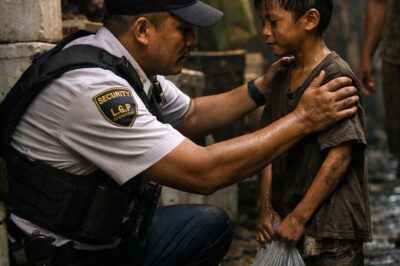
ISANG BATANG YAGIT ANG HULI SA AKTO NG PAGNANAKAW SA MADULAS NA PALENGKE NG DIVISORIA NA NAGDULOT NG TENSYON NANG KALADKARIN SIYA NG KINATATAKUTANG GWARDYA, NGUNIT ANG LIHIM NA PAGSUNOD NG ISANG TINDERO AY MAGBUBUNYAG NG KAKAIBANG ANYO NG HUSTISYA
Isang batang magnanakaw ang nahuli sa abalang pagnanakaw sa maingay na pamilihan ng Divisoria, na lumikha ng tensyon habang kinakaladkad…

Manny Pacquiao Has Something Bad to Do with Jillian Ward? Emman Bacosa Completely Deletes the Actress from His Life After Discovering That the Girl Has Another Man’s Attention!
In the world of showbiz and sports, it seems that nothing is more explosive than the news involving a Pacquiao…

HABANG LUMULUBOG ANG BAYAN SA TAAS-PRESYO… ISANG ARTISTA ANG GUMAWA NG HINDI INAASAHAN — ANG LIHIM NA DESISYON NI DONNY PANGILINAN NA NAGPAIYAK SA MGA DRAYBER AT NAGPA-ASA SA LIBO-LIBONG PILIPINO
Habang Lahat Nagtaas… Si Donny Pangilinan Nagbaba Para sa Tao. HABANG LUMULUBOG ANG BAYAN SA TAAS-PRESYO… ISANG ARTISTA ANG GUMAWA…

Viral Controversy Clarified: The Truth Behind the Alleged Incident Involving Jeric Raval and Kylie Padilla
In the fast-moving world of entertainment, where headlines are often driven by speculation and amplified by social media, it takes…

https://av.weeknews247.com/aviet/unang-panalo-nabuksan-ang-iran-blockade-balik-export-na-ang-iraq-at-saudi-sa-gitna-ng-matinding-tensyon-sa-strait-of-hormuz-at-krisis-sa-pandaigdigang-merkado-ng-langis/
In the ever-evolving world of Philippine entertainment, few on-screen partnerships have captured the imagination of fans quite like Kim Chiu…

Unang Panalo! Nabuksan ang Iran Blockade: Balik Export na ang Iraq at Saudi sa Gitna ng Matinding Tensyon sa Strait of Hormuz at Krisis sa Pandaigdigang Merkado ng Langis
Sa gitna ng tila walang katapusang gulo at tensyon sa Gitnang Silangan, sa wakas ay may magandang balitang sumalubong sa…
End of content
No more pages to load