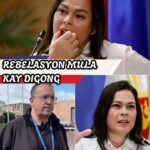
THE SENATE STORM: “KUDETA” OR A POWER RESTRUCTURING PLOT – WHEN THE SENATE PRESIDENCY IS NO LONGER UNTOUCHABLE
There are moments in political life when no official declaration is needed, no gunshots fired, no banners raised in the streets—yet an unmistakable sense of unease spreads through the air. It is the heavy feeling before a storm, when the wind has not yet risen but the sky has already begun to change. The Philippine Senate, long regarded as a fortress of institutional stability, appears to be entering such a moment.
In recent days, a word has surfaced with increasing frequency across political forums, social media, and hushed corridor conversations: “kudeta”—a coup. Not a coup in the traditional sense, with soldiers and tanks, but a “parliamentary kudeta”: a shift of power from within, legal on paper, yet cold and ruthless in practice.
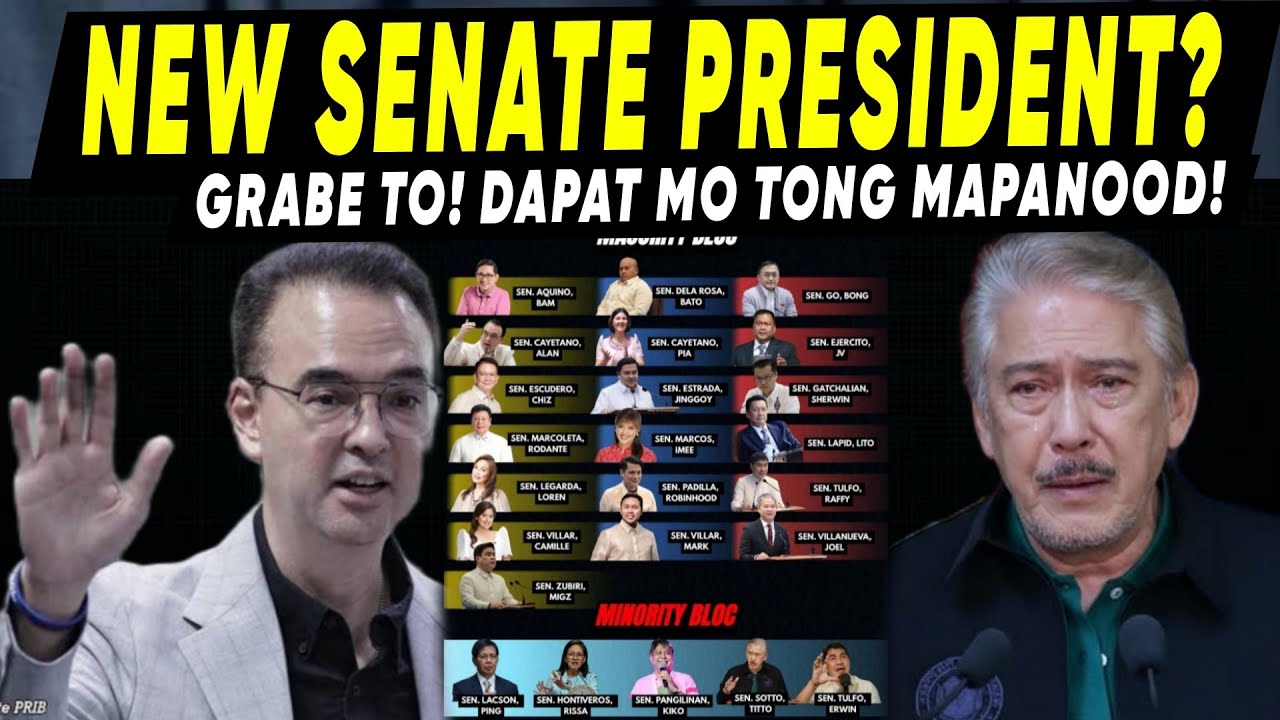
When Silence Is No Longer Harmless
The Senate has never been a noisy place. Its most consequential deals are rarely struck before cameras, but rather in closed-door meetings, private dinners, or even brief text messages laden with implication. What troubles observers now is not silence itself, but the disruption of its familiar rhythm.
Senators once considered “neutral,” seldom outspoken and rarely controversial, have suddenly become unusually active. Private meetings are taking place with striking frequency. Schedules are being quietly rearranged. Ambiguous remarks surface in short interviews. Together, these fragments form a blurred picture—yet one sharp enough to provoke suspicion: has a power-transfer script already been written, merely awaiting its moment to be revealed?
The Senate Presidency: Symbol or Spoils of War?
In any parliamentary democracy, the position of Senate President is more than a title. It symbolizes order, the capacity to manage conflict, and the balance of power. But for precisely that reason, it also becomes the ultimate prize in political maneuvering.
In the current climate, the Senate presidency no longer appears as a neutral symbol, but rather as the spoils of a broader power restructuring. Whoever holds the gavel controls the legislative agenda, sets the tempo of lawmaking, and—most critically—acts as the gatekeeper for decisions vital to the political futures of individuals and factions alike.
Sotto: From Master of the Game to a Man Under Siege
At the center of the storm stands Sotto—a seasoned political operator who understands the harsh rules of the power game better than most. For years, he has been viewed as a figure of stability and experience. Yet it is precisely that experience which teaches him one brutal truth: in politics, no position is permanently secure.
From a position of control, Sotto now risks becoming a casualty of the very mechanisms he once skillfully managed. Former allies begin to keep their distance. Familiar nods grow hesitant. And behind the scenes, new handshakes are being exchanged—without him.
History Does Not Forgive Hesitation
Political history in the Philippines, as elsewhere, reveals a ruthless rule: when the moment arrives, hesitation equals defeat. Parliamentary power shifts are rarely loud, but they are always decisive. One sufficient vote, one coalition large enough, and the balance of power tilts instantly.
If the scenario of a “parliamentary kudeta” proves real, then next Monday could mark a stark black-and-white turning point, where everything is decided within a matter of hours. No gray areas. No second chances.
Conspiracy or Systemic Adaptation?
Still, labeling these developments simply as a “conspiracy” may be inadequate. From another perspective, this could be the cold adaptation of a political system responding to deeper shifts in power. When interests are no longer guaranteed and centers of influence move, leadership reshuffles become almost inevitable.
The issue is not change itself, but the manner in which change occurs. A transition presented as lawful may nonetheless leave deep cracks within the institution, eroding public trust and setting a dangerous precedent for the future.
A Knife at the Throat and the Politics of Survival
The metaphor of a “knife at the throat” is no exaggeration. At this juncture, every decision Sotto makes is existential. A statement delivered at the wrong time. A move misunderstood. An alliance misjudged. Any of these could trigger an irreversible collapse.
Yet such is the paradox of power: by the time you see the knife, it is often already too late to avoid it.
Is the Storm Only Beginning?
The most terrifying moment of a storm is not its landfall, but the stillness that precedes it. The Philippine Senate now seems caught in that very pause. Everything continues to function. Sessions proceed. Statements are issued in measured tones. But beneath the surface, violent undercurrents are at work.
Whether next Monday becomes a historic turning point or not, one thing is clear: the belief that the Senate is immune to shocks of power has been irreversibly shaken. And once that belief collapses, every scenario—no matter how unthinkable it once seemed—becomes possible.
Conclusion: When History Is Written in Silence
History is rarely written with explosions. More often, it is composed in silence—through closed-door meetings, secret ballots, and decisions never openly acknowledged as a “coup.”
If there is a lesson to be drawn from this gathering storm, it is this: in politics, nothing is more dangerous than believing you already control the game. For Sotto, and for the Philippine Senate as a whole, the coming days may determine not only the fate of one man, but also how parliamentary power itself will be understood for years to come.
News
Isang malaking rebelasyon ang kakapasok lang mula sa kampo ni Tatay Digong! Sa gitna ng mga pag-atake at banta ng impeachment, may mahalagang mensahe ang defense team ni dating Pangulong Rodrigo Duterte para sa lahat ng kanyang mga tagasuporta. Habang papalapit ang kanyang kaarawan ngayong March 28, isang espesyal na sorpresa ang inihahanda na siguradong ikagagalak ng bawat DDS. Ano nga ba ang laman ng mensaheng ito ni Attorney Kaufman? Huwag hayaang mabulag sa mga maling balita. Alamin ang tunay na kaganapan at kung paano kayo makakasali sa selebrasyon. Basahin ang buong detalye sa comment section!
Sa gitna ng umiinit na usaping pulitikal sa bansa, isang mahalagang balita ang mabilis na kumakalat sa social media partikular…

“SINUNGALING KA!” KAMPO NI VP SARA, NAGlabas NG RESIBO! PEKENG KAIBIGAN NI MADRIAGA, BINULGAR ANG MGA LIHIM NA AFFIDAVIT!
DAVAO CITY, Pilipinas – Hindi na nakapagpigil ang kampo ni Vice President Sara Duterte! Matapos ang ilang araw na pananahimik, sa wakas…
ANG GABI NA NAGPAGISING SA DAVAO: ANG HINDI INAASAHANG PAG
May mga gabing tahimik sa papel, ngunit nag-iiwan ng bakas sa kasaysayan. Ganitong-ganito ang nangyari noong Nobyembre 4 sa Davao City, isang…

ICC, Russia, at China: Ano ang tunay na kinalaman ni Duterte sa tensyong ito?
Ang Malaking Tanong sa ICC, Russia, at China: Ano ang Papel ni Duterte sa Gitna ng Pandaigdigang Tensyon? Sa pagpasok…

Paano Panatilihin ang Kalmado at Matalinong Pag-iisip sa Gitna ng Mainit na Balitang Politikal: 5 Tips para sa Iyong Mental Wellness
Sa kasalukuyang panahon ng mabilis na daloy ng impormasyon, hindi na nakapagtataka na ang bawat Pilipino ay nakatutok sa mga…

Mula sa Kaguluhan Tungo sa Katatagan: 5 Aral sa Pagpili ng “Inner Circle” para sa Iyong Tagumpay at Payapang Pamumuhay
Sa gitna ng mga naglalakihang balita tungkol sa tensyon sa pulitika at mga isyung kinakaharap ng ating bansa, madalas nating…
End of content
No more pages to load