It was as if she was afraid that if she read it, the last shred of hope would be completely gone—that it might all be just a dream. She sat next to the coffin, staring at her father’s face. Peaceful. It was as if Mang Ruben was just sleeping after a long journey.
“Father…” she called softly. “Wake up. Let’s go home.”
There was no answer.
The surroundings were full of whispers, prayers, and the smell of candles. But for Gladys, it was as if there was a thick glass between her and the world. Everything was blurry. Everything was slow.
Finally, she slowly opened the envelope.
THE LETTER
My daughter Gladys,
If you are reading this, I may no longer be here.
I am sorry if this is all I can leave—a letter and a few words that I cannot say to you face to face.
I know you are sometimes ashamed of me. I can see it in the way you avoid looking at me, in the way your voice turns cold when I pick you up. It hurts, yes. But I understand more than you think.
I did not aspire to be a pedicab driver for the rest of my life. But I aspired to be a father who would never abandon you.
If there is one thing I am proud of in my life, it is you. At no time, have I been ashamed of you. I hope that one day, you will not be ashamed of me either—even if I am no longer here.
I have saved something. Not much, but enough for your first steps. It is in the piggy bank under the bed.
Don’t blame yourself, my child. I love you—even if you did not return my hug at graduation.
—Dad

Gladys read the letter over and over again, until she could no longer see the words because of her tears. Each line felt like it was slowly cutting into her chest—not because of guilt, but because of the goodness she had never seen before.
“You were not ashamed of me…” she whispered again.
“I was the only one who was ashamed of you…”
THE MEMORIES THAT ARE LATE
After the funeral, Gladys returned to their small house—smaller now, because her father was no longer present. Every corner was silent. The old pedicab was parked outside, never to be moved again.
She entered Mang Ruben’s room.
Under the bed, there was the piggy bank—a biscuit tin, scratched and scuffed. She opened it. Inside, there were crumpled bills, coins, and a small piece of paper with the date.
“For Gladys’s graduation.”
She sat down on the floor.
She remembered the nights her father would come home exhausted, barely able to stand, but he would still force her to cook. The mornings he would wake her up early so she wouldn’t be late for class. The times she had a fever and her father would spend the night wiping himself with a towel.
She had seen all that before.
But she didn’t appreciate it.
THE ANGRY THAT BECAME SAD
“Why only now?” Gladys asked in her absence.
“Why do you have to disappear before I understand?”
But no one could answer.
In the days that followed, neighbors visited. Some brought food, some gave a little money, some told stories of the good deeds Mang Ruben had done.
“Ruben, he’s quiet,” said an old man. “But when someone is hospitalized here, he’s the first to pay for the fare.”
“He doesn’t drink,” added another. “He said it’s a waste of money. It’s better to add it to the savings for his son.”
Gradually, a picture of her father—a man with a heart bigger than the life he had given her—formed in her mind.
And amidst it all, one feeling remained:
regret.
Not anger. Not anger at herself.
But sadness—that the misunderstandings could no longer be resolved.
THE ACCEPTANCE
One night, Gladys sat outside the house, next to the pedicab. She gripped the steering wheel—rough, cold.
“Dad,” she said softly, “I’m sorry.”
She didn’t apologize to make herself feel better. She apologized because she finally understood.
“I didn’t know you were enough,” she continued. “I was the one who was missing.”
The night was quiet. A cricket chirped in the distance. No answer—but she felt as if someone was listening.
For the first time since her father’s death, Gladys took a deep breath—not to hold back the tears, but to accept them.
THE CHANGE
A few months later, Gladys started working while waiting for college enrollment. Not in the office. Not in the mall.
But in a small cafeteria near the terminal.
Many were surprised. “What a waste of your talent,” some said.
She just smiled. “It’s not a waste if you’re learning.”
Every morning, she saw pedicab drivers—men almost the same age as her father. Now, she looked at them differently. With respect. With tenderness.
Once, there was an old pedicab driver struggling to pedal uphill.
“Brother, I’ll go,” Gladys said, helping him push.
The man was surprised. “Thank you, hija.”
She smiled. In her heart, this must be how Dad feels when someone is helped.
6. THE LAST MEMORIES
A year after Mang Ruben’s death, Gladys graduated from college.
Amidst the applause, her chest suddenly tightened. Not because of shame—but because something was still missing.
When she left the gym, there was no pedicab waiting. No bouquet.
But instead of crying, she smiled.
She approached a flower shop on the side of the road. She bought a small bouquet—just like the one her father had bought for her.
She headed straight to the cemetery.
She placed the flower on Mang Ruben’s grave.
“Dad,” she said, softly but clearly, “I graduated.”
She sat down on the grass. She didn’t rush. She didn’t cry out loud.
“I’m not ashamed anymore,” she added. “And I hope… you’re still proud.”
The wind blew. The leaves stirred.
And in the midst of the silence—
Gladys felt a strange lightness.
She could no longer turn back time.
She could no longer change the past.
But she could carry love—
not as a burden,
but as strength.
And there, beside his father’s grave,
he finally said the words he had been holding back for so long—
“Thank you, Dad.”
Not a shout.
Not a cry.
A weak voice—
but whole.
News

It seems like a nightmare has awakened in Malacañang! As the impeachment hearings approach, a huge piece of news has shaken the administration!
A Moment of Reflection for Leadership and Public Confidence In recent months, political observers and citizens alike have been paying…

NAGMAMAYABANG ANG LALAKI SA PERYA NA SNIPER DAW SIYA SA VIDEO GAMES KAYA SIGURADONG MAPAPANALUNAN NIYA ANG HIGANTENG TEDDY BEAR PARA SA NILILIGAWAN, PERO NAG-CHEER ANG MGA TAMBAY SA TUWA NANG PURO SABLAY ANG TIRA NIYA
Maingay, makulay, at amoy popcorn na humahalo sa usok ng barbecue—ganito ang senaryo sa sikat na peryahan sa Dasmariñas, Cavite…
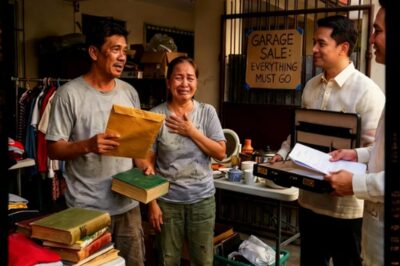
A COUPLE WHO BOTH LOST THEIR JOB AND DECIDED TO SELL THEIR GARAGE EQUIPMENT TO BUY FOOD BUT WHILE THEY WERE ORGANIZING OLD BOOKS, AN ENVELOPE FELL THAT THEY HAD FORGOTTEN LONG AGO.
The air inside Mario and Teresa’s small apartment was heavy. They both sighed as they stared at the separation pay…
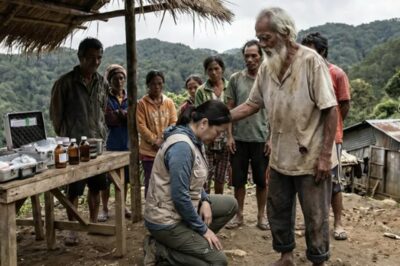
ISANG MATAPANG NA DOKTOR MULA SA MAYNILA ANG NAGSADYA SA BUNDOK UPANG IPAKULONG ANG ISANG SIKAT NA ALBULARYO DAHIL SA ILIGAL NA PANGGAGAMOT NITO SA MGA KATUTUBO PERO SA HULI AY SALUDO SIYANG LUMUHOD NANG MATUKLASAN NIYANG ANG KATOTOHANAN
Mainit ang ulo ni Dra. Celina habang inaakyat ng kanyang medical team ang matarik na bundok ng Sitio Agos sa…
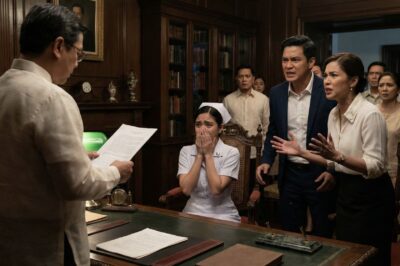
ALMOST ALL THE CAREGIVERS GAVE UP TO THE OLD MAN OF SORROW AND WEALTH, BUT ONE NURSE STAYED BY HIS SIDE UNTIL DEATH, SO THE RELATIVES WERE SURPRISED THAT SHE PROBABLY INHERITED THE ENTIRE MANSION AND WEALTH OF DON FAUSTO
Here is a story that will touch your heart and prove that kindness has a reward in a way we…

vpsara released goodnews that suddenly shocked the entire political arena and public opinion, while the blockbuster news about her sudden bumitaw and umamin all over the media shook the palasy0
In moments when international legal institutions enter public discussion, tension often follows. This is not because decisions are imminent, but…
End of content
No more pages to load