
In the volatile arena of Philippine politics, few forces move faster than rumor. Social media accelerates speculation into trending narratives within hours, while livestream commentary and viral clips amplify allegations before official statements can even be drafted.
In recent days, online discussions have been dominated by explosive claims involving high-ranking officials, alleged meetings with representatives of the International Criminal Court (ICC), questions about witness protection, and accusations of secret dealings. Names such as Justice Secretary Jesus Crispin “Boying” Remulla, former Senator Antonio Trillanes IV, and President Ferdinand “Bongbong” Marcos Jr. have been repeatedly invoked in a swirl of commentary, conjecture, and political interpretation.
Yet beneath the emotional rhetoric lies a more complex story—one that requires careful examination, factual clarity, and measured analysis.
This is not merely about personalities. It is about institutional credibility, public accountability, and the delicate intersection between domestic governance and international legal processes.
The ICC Context
The Philippines formally withdrew from the Rome Statute in 2019 under former President Rodrigo Duterte. However, the ICC maintains jurisdiction over alleged crimes committed during the period when the country was still a member state.
Since then, debates over cooperation with the ICC have become a recurring flashpoint in Philippine politics.
President Ferdinand Marcos Jr. initially signaled reluctance to cooperate with ICC investigations, emphasizing national sovereignty. However, subsequent developments and statements have created public confusion about the precise scope of government engagement.
It is within this broader backdrop that the latest allegations have emerged.
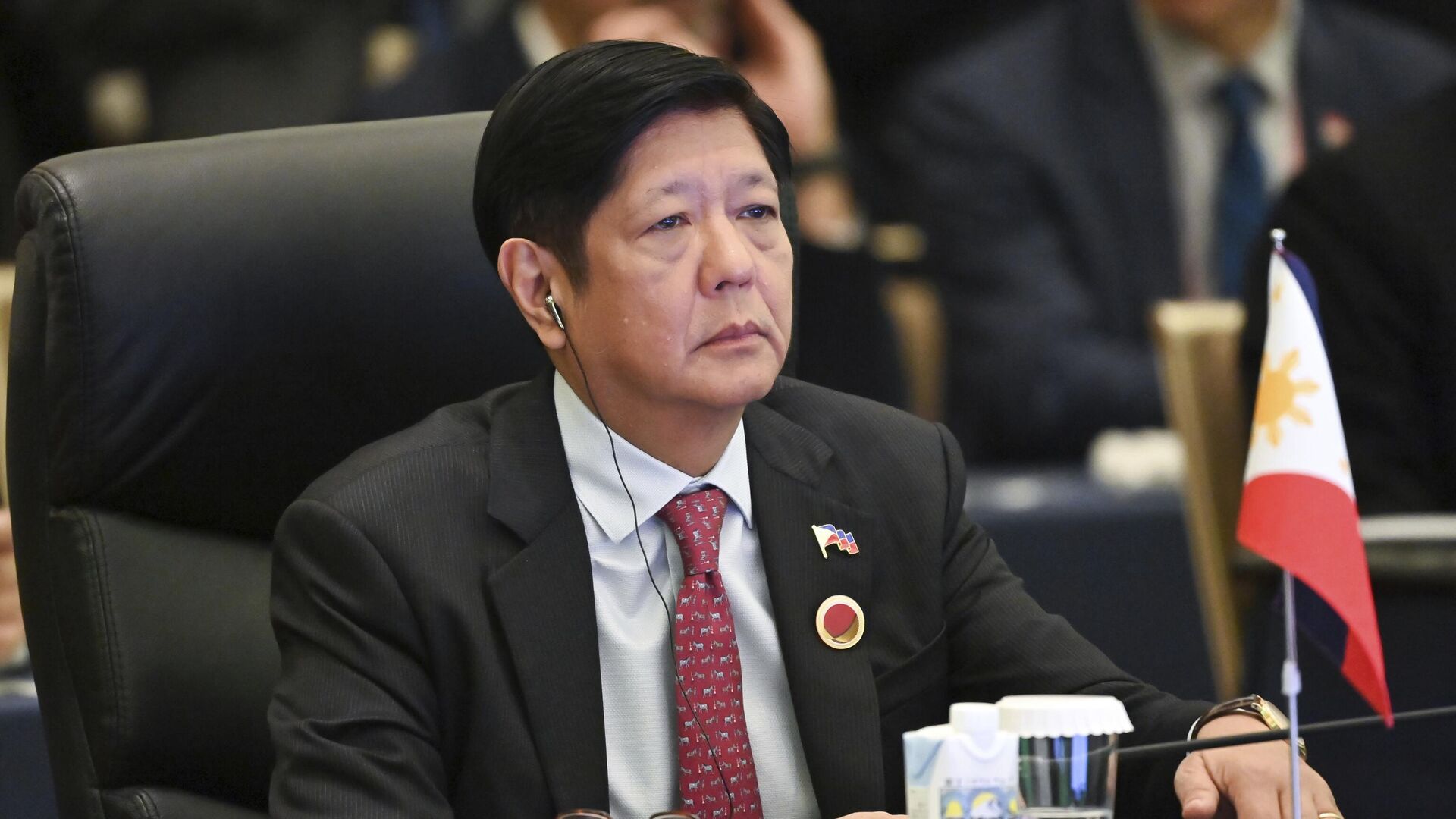
The Alleged Meeting
At the center of the controversy are claims that Justice Secretary Remulla met with two representatives of the ICC at his private residence in Makati. According to public interviews, Remulla acknowledged meeting ICC representatives, describing the discussion as related to the protection of potential witnesses.
He reportedly stated that the protection of Filipino witnesses was a matter of concern, particularly if they were participating in international legal processes.
Former Senator Antonio Trillanes IV has also acknowledged past contact with ICC investigators dating back several years. Trillanes has long positioned himself as an outspoken critic of Duterte’s war on drugs and has openly supported international scrutiny.
The controversy, however, lies not in whether contact occurred—but in the implications attributed to it by online commentators.
The Suitcase Allegations
Among the most provocative claims circulating online are insinuations that money—symbolized in commentary as “suitcases of cash”—changed hands during these interactions.
It is critical to emphasize that no verified evidence has been publicly presented proving that any official received money in connection with ICC discussions.
The “suitcase” narrative appears to stem from online speculation and references in affidavits submitted by former security personnel connected to a separate case involving a former congressman.
To date, there has been no official confirmation from investigative bodies substantiating claims of bribery.
In political discourse, imagery can be powerful. A “suitcase of money” evokes secrecy, corruption, and clandestine transactions. But without documented proof, such imagery remains allegation—not fact.
Affidavits and the Ombudsman’s Role
The controversy intensified after a joint affidavit was reportedly submitted by former soldiers claiming knowledge of meetings and alleged financial transactions.
Justice Secretary Remulla has stated that for any investigation to proceed meaningfully, individual affidavits—not merely a collective document—would be necessary. He argued that each witness must detail personal knowledge separately to establish credibility and specific accountability.
Critics, however, interpret this request differently. Some argue that separating testimonies could expose individuals to intimidation or weaken collective claims. Others view it as a procedural standard necessary for legal rigor.
The Office of the Ombudsman, constitutionally tasked with investigating public officials, has yet to release definitive findings on the matter.
Political Interpretation
Online commentators have framed the situation within a broader narrative: shifting government positions on ICC cooperation, alleged inconsistencies in presidential statements, and possible internal political maneuvering.
Some critics argue that changes in tone regarding ICC engagement suggest policy reversal. Others contend that government strategy may have evolved in response to diplomatic realities.
Political analysts caution against equating policy evolution with deception. Governments frequently recalibrate positions based on legal advice, international relations, and domestic considerations.
Still, perception shapes public opinion.
When leaders articulate firm positions and later adopt more nuanced approaches, skepticism can grow—even if the underlying reasoning is complex.
The Trillanes Factor
Former Senator Trillanes’ longstanding relationship with ICC investigators is no secret. He has publicly stated in interviews that he has been in communication with ICC officials since 2017, assisting in gathering information and witnesses.
This transparency, however, fuels polarized interpretation.
Supporters view his actions as advocacy for accountability. Critics interpret them as political maneuvering aimed at undermining rivals.
As in many politically charged contexts, intent is often inferred through partisan lenses.
Media Responsibility and Public Reaction
Another dimension of the controversy involves claims that mainstream media has underreported certain allegations while highlighting official responses.
Media organizations operate under editorial standards requiring verification before publication. Allegations unsupported by documentary evidence often remain unreported to avoid legal and ethical pitfalls.
To some observers, this restraint appears as suppression. To journalists, it reflects due diligence.
In the age of social media, where content circulates without gatekeeping, the contrast between viral claims and formal reporting becomes stark.
The Question of Credibility
A central tension in the debate revolves around credibility.
Who should the public believe?
Officials who deny wrongdoing and call for structured investigation?
Or whistleblowers who risk personal safety to submit affidavits?
History offers examples supporting both caution and vigilance. Genuine corruption has been uncovered through brave testimony. Conversely, politically motivated accusations have also been weaponized to destabilize opponents.
The rule of law demands that allegations be examined through evidence—not emotion.
The Blue Ribbon Committee Debate
Calls have emerged for the Senate Blue Ribbon Committee to investigate the matter. Committee Chair Senator Panfilo Lacson reportedly expressed skepticism about proceeding without credible, individually substantiated evidence.
This has drawn criticism from those who see delay as avoidance.
Legislative investigations, however, operate within procedural frameworks. Establishing jurisdiction, assessing documentary validity, and avoiding prejudgment are part of the process.
Whether the committee will pursue hearings remains uncertain.
Sovereignty Versus Accountability
At its core, the ICC debate touches on a deeper philosophical divide: sovereignty versus international accountability.
Those opposing ICC involvement argue that Philippine institutions are fully capable of handling domestic legal matters. Supporters counter that international oversight becomes necessary when domestic remedies are perceived as insufficient.
This tension extends beyond any single administration. It reflects broader questions about global justice mechanisms and national autonomy.
Political Timing
The allegations surface amid intensifying speculation about the 2028 presidential race, including discussions about potential candidates and shifting alliances.
In Philippine politics, timing is rarely coincidental.
Controversies that cast doubt on rivals can influence public perception years before ballots are printed.
Whether the current wave of allegations is connected to long-term political positioning remains speculative—but observers acknowledge that political narratives often begin early.
The Danger of Polarization
What makes this episode particularly volatile is the blending of legal questions with emotionally charged commentary.
When allegations are framed in absolute terms—declaring guilt before investigation—public discourse hardens into camps.
Healthy democratic societies depend on skepticism balanced by fairness. Investigations must be thorough. But conclusions must be evidence-based.
Otherwise, the court of public opinion risks overshadowing the rule of law.
What Happens Next?
Several possible paths lie ahead:
The Ombudsman formally investigates and releases findings.
The Senate initiates hearings.
The controversy fades without substantiated evidence.
New documentation emerges altering the landscape entirely.
Until verifiable evidence is presented, the situation remains unresolved.
The Bigger Picture
Beyond personalities and partisanship, this moment underscores a fundamental truth: trust in institutions is fragile.
When citizens perceive inconsistency, secrecy, or delay, confidence erodes. Conversely, when officials transparently address allegations through due process, credibility strengthens.
The responsibility lies not only with politicians, but with investigative bodies, journalists, and citizens to demand accountability without abandoning fairness.
A Nation Watching
As discussions continue across digital platforms and traditional media, one reality remains clear: Filipinos are paying attention.
They are questioning, analyzing, debating.
And in that engagement lies both the strength and challenge of democracy.
The allegations surrounding ICC meetings, affidavits, and supposed financial transactions are serious. They deserve scrutiny. But scrutiny must be grounded in documented fact.
In a political climate saturated with viral claims, the ultimate test is not how loudly accusations are made—but how carefully they are examined.
Until official investigations produce conclusive findings, the story remains open-ended.
What is certain is this: in the Philippines’ evolving political landscape, narratives can shift overnight—but truth, when pursued with rigor, endures beyond rumor.
News

Manny Pacquiao Has Something Bad to Do with Jillian Ward? Emman Bacosa Completely Deletes the Actress from His Life After Discovering That the Girl Has Another Man’s Attention!
In the world of showbiz and sports, it seems that nothing is more explosive than the news involving a Pacquiao…

HABANG LUMULUBOG ANG BAYAN SA TAAS-PRESYO… ISANG ARTISTA ANG GUMAWA NG HINDI INAASAHAN — ANG LIHIM NA DESISYON NI DONNY PANGILINAN NA NAGPAIYAK SA MGA DRAYBER AT NAGPA-ASA SA LIBO-LIBONG PILIPINO
Habang Lahat Nagtaas… Si Donny Pangilinan Nagbaba Para sa Tao. HABANG LUMULUBOG ANG BAYAN SA TAAS-PRESYO… ISANG ARTISTA ANG GUMAWA…

Viral Controversy Clarified: The Truth Behind the Alleged Incident Involving Jeric Raval and Kylie Padilla
In the fast-moving world of entertainment, where headlines are often driven by speculation and amplified by social media, it takes…

https://av.weeknews247.com/aviet/unang-panalo-nabuksan-ang-iran-blockade-balik-export-na-ang-iraq-at-saudi-sa-gitna-ng-matinding-tensyon-sa-strait-of-hormuz-at-krisis-sa-pandaigdigang-merkado-ng-langis/
In the ever-evolving world of Philippine entertainment, few on-screen partnerships have captured the imagination of fans quite like Kim Chiu…
Unang Panalo! Nabuksan ang Iran Blockade: Balik Export na ang Iraq at Saudi sa Gitna ng Matinding Tensyon sa Strait of Hormuz at Krisis sa Pandaigdigang Merkado ng Langis
Sa gitna ng tila walang katapusang gulo at tensyon sa Gitnang Silangan, sa wakas ay may magandang balitang sumalubong sa…

Mula sa Bulwagan ng Senado Patungo sa Harapan ng Kalamidad: Nasaan na nga ba ang Maalamat na ‘Action Man’ na si Dick Gordon at Ano ang Kanyang Pinagkakaabalahan Ngayong 2026?
Sa mabilis na takbo ng pulitika sa Pilipinas, madaling makalimot ang publiko sa mga pangalang dati ay laging laman ng…
End of content
No more pages to load