
Every year on March 8, millions of people around the world gather to celebrate courage, resilience, and the continuing struggle for equality during International Women’s Day. In the Philippines, the occasion has long been marked by rallies, cultural events, and passionate speeches calling for justice, dignity, and empowerment for women.
But this year’s commemoration in the nation’s capital took a dramatic turn.
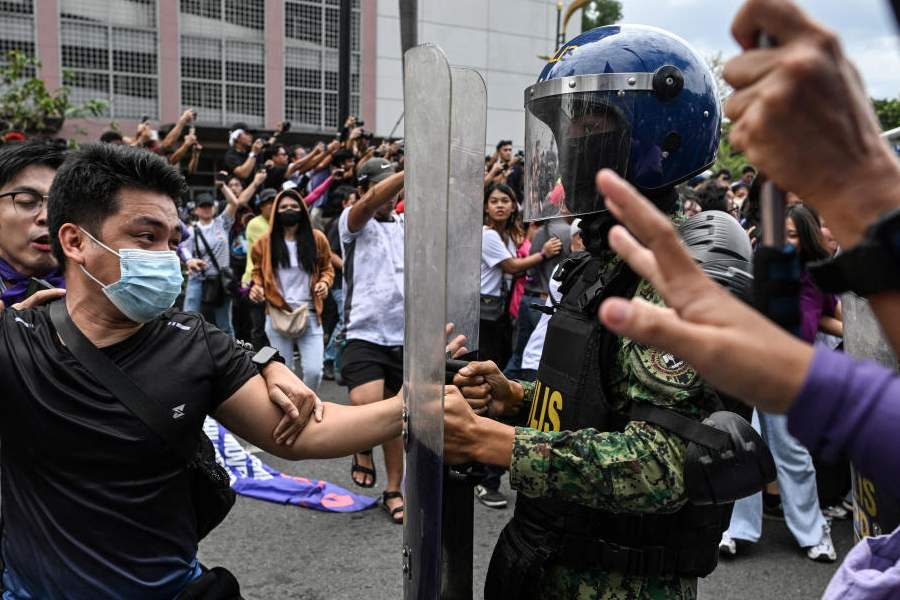
What began as a powerful demonstration of solidarity soon escalated into tense confrontations between activists and police forces in Manila, transforming the annual celebration into a day of both inspiration and controversy.
A Day Meant for Celebration
International Women’s Day has always carried deep significance for Filipino activists and civil society groups.
Across the country, women’s organizations, labor groups, students, and human rights advocates gather annually to highlight issues such as gender-based violence, economic inequality, labor rights, and political representation.
In Manila, thousands of participants converged on key areas near Mendiola Peace Arch, a historic site known for political demonstrations and protests.
Participants carried banners and placards with messages demanding justice for victims of abuse, fair wages for women workers, protection for migrant laborers, and greater representation for women in government leadership.
Chants of solidarity echoed through the streets as groups marched under the intense tropical sun.
Many participants described the rally as not just a protest but a celebration of courage and collective action.
The Voices Behind the March
For many demonstrators, the rally represented an opportunity to speak about issues that continue to affect women across Philippine society.
Some activists focused on economic struggles.
Women workers, they argued, remain among the most vulnerable sectors of the labor force, often facing lower wages, unstable employment, and limited workplace protections.
Others highlighted the plight of overseas Filipino workers, particularly domestic helpers who travel abroad to support their families.
The Philippines is one of the world’s largest exporters of labor, and many women working overseas face risks ranging from exploitation to abuse.
Human rights groups also used the rally to call attention to violence against women and girls—a problem that remains a persistent concern in the country.
Speakers urged the government to strengthen laws, improve enforcement, and provide better protection for victims.
A Gathering That Grew Tense
While the rally initially unfolded peacefully, tensions began to rise as protesters attempted to move closer toward government buildings and restricted areas.
Authorities had deployed a significant number of police officers to monitor the event and maintain order.
As the crowd approached barricades near Mendiola, police formed a defensive line, blocking further access.
Organizers insisted that their march was peaceful and that participants had the right to demonstrate.
Police, however, maintained that the restrictions were necessary to ensure public safety and protect government facilities.
The disagreement quickly escalated.
The Moment of Confrontation
Witnesses described the atmosphere changing rapidly.
Chants grew louder. Protesters pushed forward toward the barricades while police officers attempted to hold their positions.
Shouting erupted from both sides as tensions reached a breaking point.
At one point, demonstrators attempted to dismantle barriers placed by authorities, leading police to push back in an effort to restore order.
The confrontation resulted in a chaotic scene.
Placards were raised high, flags waved through the air, and protesters shouted slogans demanding justice and accountability.
Some activists claimed police used force to disperse the crowd, while authorities insisted their actions were necessary to prevent violence.
Injuries and Arrests Reported
As the confrontation intensified, reports began emerging of injuries among both protesters and police personnel.
Several demonstrators said they had been pushed or struck during the clash, while authorities reported that some officers were also hurt in the struggle.
Medical volunteers attending the rally quickly moved through the crowd to assist individuals who needed treatment.
A number of protesters were reportedly detained during the incident, though the exact number remained unclear in the immediate aftermath.
Human rights organizations quickly called for the release of those arrested, arguing that peaceful protest is a fundamental democratic right.
Police Response and Explanation
Police officials later defended their actions, stating that they had exercised restraint and acted only when the situation threatened to spiral out of control.
According to their statements, the barricades had been established to prevent demonstrators from entering areas considered security-sensitive.
Authorities emphasized that the primary goal of law enforcement was to maintain peace and prevent damage to public property.
They also urged rally organizers to coordinate more closely with officials during future events to avoid similar confrontations.

Activists Speak Out
For many participants, however, the clash highlighted deeper frustrations about how protests are handled in the Philippines.
Activists argued that demonstrations—particularly those advocating for social justice—often face heavy police presence and restrictions.
They said the confrontation overshadowed the real purpose of the rally: raising awareness about women’s rights.
“We came here to speak about justice, equality, and safety for women,” one protester told reporters. “But instead we were met with barricades.”
Organizers insisted that their cause would not be silenced by intimidation.
They vowed to continue advocating for women’s rights despite the tensions that unfolded.
The Symbolism of Mendiola
The location of the rally added historical weight to the confrontation.
Mendiola has long been a symbol of political activism in the Philippines.
Over the decades, it has witnessed countless demonstrations addressing issues ranging from labor rights to land reform.
The area’s proximity to government institutions has made it a focal point for citizens seeking to make their voices heard.
For many activists, marching toward Mendiola is not just a logistical choice—it is a symbolic act representing the people’s right to challenge authority.
The Broader Struggle for Women’s Rights
Despite the clash, many participants emphasized that the larger message of International Women’s Day must not be forgotten.
Across the Philippines, women continue to push for progress in areas such as workplace equality, access to healthcare, education, and protection from violence.
While the country has produced strong female leaders and achieved significant milestones in gender representation, advocates say much work remains to be done.
Issues such as domestic abuse, gender discrimination, and economic inequality continue to affect countless women nationwide.
For activists, rallies like the one in Manila are essential for keeping these issues visible.
A Global Movement
The events in Manila also reflect the broader global significance of International Women’s Day.
Across continents, millions of people gather each year to celebrate achievements while demanding further change.
From Europe to Africa to Asia, rallies highlight shared struggles for equality and justice.
Although each country faces unique challenges, the underlying message remains universal: women deserve dignity, opportunity, and safety.
In the Philippines, the passion displayed by protesters reflects how deeply these issues resonate within society.
Reactions Across Social Media
Following the clash, videos and photos quickly circulated across social media platforms.
Clips showing protesters confronting police officers sparked intense discussions online.
Some viewers expressed support for the activists, praising their courage in speaking out for women’s rights.
Others argued that authorities had a responsibility to maintain order during large public gatherings.
The debate quickly spread across digital platforms, illustrating how modern protests often extend far beyond the physical streets where they begin.
Calls for Dialogue
In the aftermath of the confrontation, several organizations called for calm and dialogue.
Human rights groups urged authorities to respect the right to peaceful assembly while encouraging protesters to maintain nonviolent demonstrations.
Some analysts suggested that improved communication between rally organizers and law enforcement could help prevent future clashes.
The challenge, they noted, lies in balancing security concerns with the democratic right to protest.
A Day That Will Not Be Forgotten
As the sun set over Manila, the streets gradually cleared, leaving behind banners, scattered leaflets, and lingering questions about the day’s events.
For many participants, the rally was both inspiring and sobering.
It demonstrated the strength of collective action—but also the tensions that can arise when activism meets authority.
The Continuing Fight
International Women’s Day is ultimately about progress.
It celebrates victories achieved through decades of struggle while reminding the world that equality remains a work in progress.
In Manila, the clash between protesters and police may have overshadowed parts of the day’s celebration.
Yet the voices that filled the streets carried a message that will continue long after the barricades are removed.
For the women and allies who marched that day, the fight for justice, dignity, and equality does not end with a single rally.
It continues in communities, workplaces, and homes across the country.
And as long as those voices remain determined, the spirit of International Women’s Day will endure—no matter the obstacles that stand in its path.
News

“Palagi siyang bumabangon ng alas-3 ng madaling araw. Dahil sa kuryosidad, palihim ko siyang sinundan… ang tanawing bumungad sa akin ay ikinagulat ko, isang sikretong itinago niya sa loob ng maraming taon.”
Ang pangalan ko ay Hanh, 32 taong gulang, nakatira sa isang lumang condominium sa Quezon City. Ang asawa ko ay…

HALOS GUMUHO ANG MUNDO NG ISANG DALAGA NANG MAWALA NIYA ANG PINAKAMAHALAGANG RELOS NG KANYANG LOLO KAYA GINAWA NIYA ANG LAHAT UPANG MAPALITAN ITO BAGO ITO MAWALAN NG BUHAY NGUNIT ISANG SIKRETO ANG MABUBUNYAG SA HULING HININGA NG MATANDA
Halos gumuho ang mundo ng isang dalagang si Alena nang mawala niya ang pinakamahalagang relo ng kanyang lolo. Ginawa niya…
ISANG MATANDANG LALAKI ANG BUMAGSAK SA LOOB NG UMAANDAR NA BUS HABANG YAKAP ANG KARTON NA MAY BAHID NG DUGO KAYA SUMIKLAB ANG PANIC SA MGA PASAHERO NA NAG-AAKALANG MAY PANGANIB
Isang matandang lalaki ang biglang bumagsak sa loob ng umaandar na bus habang mahigpit na yakap ang isang karton na…
ISANG DELIVERY RIDER ANG NAKATANGGAP NG FAKE BOOKING NA ISANG LIBONG PISONG KAPE, KAYA ININOM NA LANG NIYA ITO SA INIS HABANG UMUULAN SA LABAS NG ISANG ABANDONADONG BUILDING, PERO NAGULAT SIYA NANG MAY BIGLANG SUMIGAW MULA SA DILIM
Isang delivery driver ang nakatanggap ng pekeng order para sa isang libong pisong halaga ng kape. Galit na galit, umupo…

Matapos kong magsilbi ng sampung taon ng aking sentensya, lumabas ako ng mga pintuan ng bilangguan. Hindi ang aking pamilya ang naghihintay sa akin, kundi isang hanay ng malamig at itim na bariles ng baril.
Pagkatapos ng sampung taong pagkakakulong, lumabas ako sa gate ng bilangguan sa Quezon City. Ang sumalubong sa akin ay hindi…

“Ngayong Kasal, Biglang Inangkin ng Biyenan ang 850,000 pesos.e—Ngunit Isang Kondisyon ng Nobya ang Bumaliktad sa Lahat at Naglantad ng Tunay na Mukha ng Pamilya!”
Sa bulwagan ng kasal sa Quezon City. Kakaanunsyo lang ng MC ng dote na 850,000 pesos. Biglang tumayo ang aking…
End of content
No more pages to load