
“Formally Valid!” – A Significant Procedural Step in the Impeachment Process of Vice President Sara Duterte
The political atmosphere in the Philippines has intensified following the announcement that the House of Representatives of the Philippines declared the impeachment petition against Sara Duterte as “formally valid.” The phrase quickly circulated across news platforms and social media, sparking strong reactions from supporters, critics, and neutral observers alike.
However, legal experts and parliamentary observers have emphasized an important clarification: the declaration of “formal validity” refers only to procedural compliance. It confirms that the petition satisfies initial technical requirements under the rules of the House. It does not, by itself, determine the truth of allegations or represent a final judgment on the substance of the case.
Even so, this development marks a meaningful stage in the constitutional process, signaling that the matter will move forward for further review and deliberation.

Understanding What “Formally Valid” Means
In legislative procedure, a petition must meet certain criteria before it can proceed. These typically include requirements related to format, documentation, proper endorsement, and timeliness. When the House declares a petition “formally valid,” it means that the document meets those basic procedural standards.
Legal scholars often describe this as a gatekeeping step. It ensures that only petitions complying with established rules enter the formal review process. Importantly, this stage does not evaluate evidence or determine guilt or innocence.
Observers have cautioned against interpreting the phrase as a verdict. It simply acknowledges that the petition has cleared the first procedural hurdle.
The Constitutional Framework
Impeachment is a mechanism provided by the Philippine Constitution to hold certain high-ranking officials accountable under defined circumstances. The process is structured in stages to safeguard fairness and due process.
First, a complaint is filed. Next, the House reviews whether the complaint is sufficient in form and substance. Only after passing these preliminary checks does the matter proceed to deeper evaluation, including possible committee hearings.
If approved at the appropriate level within the House, the case may then move to the Senate for trial. Each stage involves deliberation and voting according to constitutional guidelines.
The recent declaration of formal validity therefore represents the early portion of this multi-step framework.
Public Reaction and Political Tension
The announcement triggered varied responses across the political spectrum. Supporters of Vice President Sara Duterte expressed confidence that the process would ultimately affirm her position. Critics, meanwhile, described the development as a serious step toward accountability.
On social media, the phrase “formally valid” trended rapidly. Discussions ranged from legal analysis to emotional commentary. Some users misinterpreted the announcement as an immediate decision on the merits, while others shared explanatory posts clarifying the distinction between procedural and substantive review.
Political analysts have noted that in highly charged environments, procedural updates can sometimes be amplified beyond their technical meaning.
The Role of the House of Representatives
The House of Representatives plays a central role in initiating impeachment proceedings. Its responsibility at this stage is to determine whether a petition adheres to procedural rules.
By declaring the petition formally valid, the House fulfilled its duty to assess compliance with established guidelines. The matter now advances to the next level of examination, which may include determining whether the petition is sufficient in substance.
Members of the House are expected to evaluate evidence and arguments carefully, guided by constitutional standards rather than public pressure.
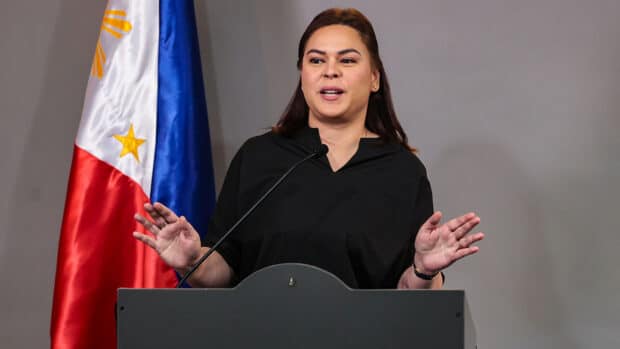
Legal Experts Weigh In
Several constitutional law experts have underscored the importance of separating procedural milestones from substantive findings. They explain that procedural validation ensures fairness by filtering out defective or incomplete petitions.
Such safeguards protect both the integrity of the process and the rights of the official involved. Due process remains a cornerstone of democratic systems, ensuring that accusations are examined systematically rather than impulsively.
In interviews and commentary, legal analysts have reiterated that the outcome of future stages remains uncertain. The process is designed to unfold step by step.
Implications for Governance
Even at an early stage, impeachment proceedings can influence governance. Political attention may shift toward legislative deliberations, and public discourse often becomes more intense.
However, constitutional processes are structured precisely to manage such moments. Institutions continue functioning while procedures run their course.
For Vice President Sara Duterte, the declaration of formal validity does not alter her current status in office. It simply initiates a structured review under the Constitution.
The Importance of Accurate Interpretation
Misinterpretation of procedural terms can contribute to confusion. Words like “valid,” when used in legal contexts, carry specific technical meanings distinct from everyday language.
Observers emphasize the need for responsible communication. Media outlets and public figures play a role in clarifying the difference between procedural acknowledgment and substantive conclusion.
Accurate interpretation promotes informed civic engagement rather than speculation.
The Road Ahead
The next stages may involve committee deliberations, debates among lawmakers, and potential voting procedures. Each step will follow constitutional and legislative guidelines.
Should the petition advance beyond the House, it would proceed to the Senate, where a trial could occur. That phase involves a separate set of rules and standards.
At this point, however, the process remains in its early stages. The declaration of formal validity signals movement but not resolution.
A Test of Democratic Institutions
Impeachment proceedings often serve as tests of institutional strength. They require lawmakers to balance political considerations with constitutional responsibilities.
The Philippines has experienced impeachment cases in the past, each contributing to evolving interpretations of procedure and accountability. The current development adds another chapter to that ongoing constitutional history.
Regardless of individual perspectives, adherence to established rules reinforces the legitimacy of outcomes.
Conclusion
The declaration by the House of Representatives that the impeachment petition against Vice President Sara Duterte is “formally valid” represents a significant procedural milestone. It confirms that the petition meets technical requirements under House rules, allowing it to proceed to further stages of review.
Crucially, this designation does not determine the substance of the allegations or predict the eventual outcome. It is a foundational step within a carefully structured constitutional process.
As the matter moves forward, attention will likely remain focused on legislative deliberations and institutional safeguards. In moments of heightened political interest, clarity and respect for due process remain essential.
The coming weeks may bring additional developments, but for now, the phrase “formally valid” stands as an acknowledgment of procedure—not a final verdict.
News
Impeachment in Motion: Withdrawal, Realignment, and the Political Chessboard Surrounding Sara Duterte
The hearing room was tense, procedural, almost clinical. Yet beneath the formal exchanges and parliamentary language, the air crackled with…

A Former Chief Justice Breaks Her Silence: Sereno’s Explosive Claims and the Deepening Reckoning Over Duterte’s Drug War
In a nation long divided by politics, loyalty, and grief, a familiar voice has re-entered the public square — and…

Economic Risk or Strategic Masterstroke? Bongbong Marcos’ POGO Ban Signals New Era After FATF Scrutiny — With gray-list monitoring by the Financial Action Task Force casting a long shadow, the administration’s bold action reshaped debates on sovereignty, reform, and investor perception. Did sacrificing short-term gains secure long-term credibility
When President Bongbong Marcos announced a sweeping ban on Philippine Offshore Gaming Operators (POGOs), the reaction was immediate and electric. Supporters hailed…

SMOKE OVER PALM JUMEIRAH, QUESTIONS BACK HOME 🔎 Explosions Reported Near Fairmont The Palm Highlight Regional Strain Involving Iran, While in the Philippines Senator Raffy Tulfo Weighs In on Due Process Surrounding Norman Mangusin.
In a city celebrated for its skyline of glass and ambition, the sound of explosions is almost unthinkable. Dubai has…

A WEEK THAT SHOOK THE POLITICAL LANDSCAPE: Ceasefire Appeals From Risa Hontiveros Amid Middle East Hostilities, Oil Price Warnings From Lawmakers, and Mounting Questions Surrounding Benny Abante Over High-End Watches — Governance, Optics, and Electoral Undercurrents Now Intertwine as 2028 Slowly Approaches.
In the ever-unpredictable theater of Philippine politics, where headlines shift as quickly as alliances, two narratives collided this week: a…

HEARTBREAKING MOMENT ON THE HOT SEAT: Rufa Mae Quinto SHARES HER FRUSTRATION OVER HER HUSBAND FOR THE FIRST TIME IN KARNA DAVILA’S TALKSHOW!
Heartbreaking Moment on the Hot Seat: Rufa Mae Quinto Opens Up About Personal Struggles for the First Time on Karen…
End of content
No more pages to load