Long before plans for a Philippine adaptation of It’s Okay to Not Be Okay were set in motion, Anne Curtis already had her sights on this project. In 2020, this K-drama centered on mental health and healing was released, offering comfort to viewers around the world—an unexpected form of relief during the pandemic when people dealt with emotional struggles. Anne, a huge fan of K-dramas, was one of the people deeply touched by its story of healing.
“I really, really wanted to do it even before I knew ABS-CBN had the rights to it,” Anne tells Metro.Style. People knew she was a fan of It’s Okay to Not Be Okay, so many assumed that when the adaptation was offered to her, it was an instant “yes” for her. But her attachment to the show made her hesitate. “I got nervous, and it took me a year to decide,” she shares. The hesitation stemmed from a seed of doubt: “Will I be able to give it justice?”
“That was my biggest concern, and you know what they say, adaptations can either work or not. So I had that in my mind,” Anne opens up. But as she thought more about the project, she realized and saw how she could help serve a purpose with it.
Anne reflects, “This is something Direk [Mae Cruz Alviar] and I were talking about. The story of It’s Okay to Not Be Okay is way bigger than whatever I was thinking about. Our story is raising awareness. It’s making people who may be going through something feel seen. And I feel that was what made me say ‘yes.’”
It’s Okay to Not Be Okay is about a woman with a dark family history, Mia, who’s also a children’s book author with an antisocial personality disorder. She meets brothers Patpat (Joshua Garcia), a nurse aide at a psychiatric hospital, and Matmat/Manong (Carlo Aquino), an aspiring illustrator who has autism. Proof of the show’s impact is that the three lead stars in the K-drama—Kim Soo Hyun, Seo Ye Ji, and Oh Jung Se—received acting awards for their portrayals; the series likewise earned nominations for Best Drama.
That there was pressure on the Filipino production team is a given, but the cast and crew chose to focus on the balance between sticking to the core of the material and maximizing the opportunity to showcase what Filipino creatives can offer. Awards are a bonus, but the more rewarding part for them is the chance to tell this relevant and relatable story of being beautifully imperfect.
 Carlo Aquino (in an ensemble by Chris Nick, bow by Chris Diaz, watch by Philip Stein, and shoes by Traffic), Anne Curtis (in a gown by Mark Bumgarner, gloves by Alex Perry, and jewelry by Tiffany & Co.), and Joshua Garcia, as photographed by Jerick Sanchez
Chapter 1: Familiarization
Like Anne, Direk Mae also had her fair share of doubts. “I honestly didn’t want to do an adaptation. I’m not a big fan of doing adaptations,” confesses Direk Mae, who, in her 30-year career, took on her first remake project through It’s Okay to Not Be Okay. She understands that comparisons are inevitable for projects like this, but acknowledging that was the first step for her to embrace the challenge. From there, the process involved familiarizing herself with the material, unpacking its nuances, and detaching from the original. In doing so, she felt she would be able to connect and offer something new not only to viewers who didn’t see the K-drama but also to those who were fans of the show.
“I think what I did was, or at least the strategy was, first, to watch the original. To know what we were working on. To review it. And to study it well. Number two was to detach from the original after studying it. You have to put it aside now. You can’t love it too much to the point that you will just copy it. Because that’s detrimental to making an adaptation,” Direk Mae explains.
That’s why it’s called an “adaptation.” Changes in the story, to some extent, are welcome if they make the story more appealing and authentic to where the adaptation takes place. “You adapt it and you adapt it to what is pleasing or what the audience can take, what the audience will appreciate,” Direk Mae reiterates. “Because Anne is such a big fan of the show, I kept telling her, ‘Anne, remember, we are not merely copying them and just remaking it.’ Or, just putting new bodies and just doing it the way they did it. Sure, we had to respect the core. We had to respect the major elements of the show. But we had to make it our own. So, owning it was one of the important things to do. How do we own it? How do we make it Filipino? How do we adapt it? I had to remind everyone: ‘Remember, we are adapting.’”
Identifying how to give this complex Korean series a Filipino flavor was one thing, but spreading awareness about mental health, the core message of It’s Okay to Not Be Okay, was another crucial aspect. In the Philippines, especially, this is a topic that’s still not that talked-about. A sensitive subject, it must be presented to the viewers with utmost care, in a manner that is not jarring or overwhelming. That was an area of focus for Direk Mae and the rest of the cast and the production team. With the plot treading the delicate path of romance, comedy, drama, and thriller, it was important to find the right approach and direction where the storylines converge at an ideal point of rendezvous.
Direk Mae watched the K-drama It’s Okay to Not Be Okay when it was released. “When I watched this, it was interesting. It was very captivating visually,“ she points out. But she admitted she was taken aback when its story was getting deeper into the mental health aspect. “I wasn’t ready for it,“ she shares. When she found out about this project, Direk Mae revisited the series. She continues, “I was on a different emotional plane, so I was ready to accept the theme. And I have a different, higher appreciation for the show after watching it, re-watching it and continuing it, and finishing it.“
Getting into the nitty-gritty of the story allowed Direk Mae to help the lead stars get into the right mindset before filming. “One of the things I do before I start a project is to always sit down with my actors. I always sit down with them, even if I know them, even if I’ve worked with them so many times, because I always want to touch base. I want to know where they are emotionally. I want to know where they are professionally, how they feel about where they stand in their careers. That’s why when I discussed it with Joshua, with Anne, and all, we were all on the same page. That was what was important. We’re gonna do this together, and I am giving you my 100%. With Carlo, what he said to me was, ‘I’m just gonna hold on to you.’“
Like that scene where Patpat and Mia escape to the beach, they all held each other’s hands on the edge of a cliff and dove right into the creative process.
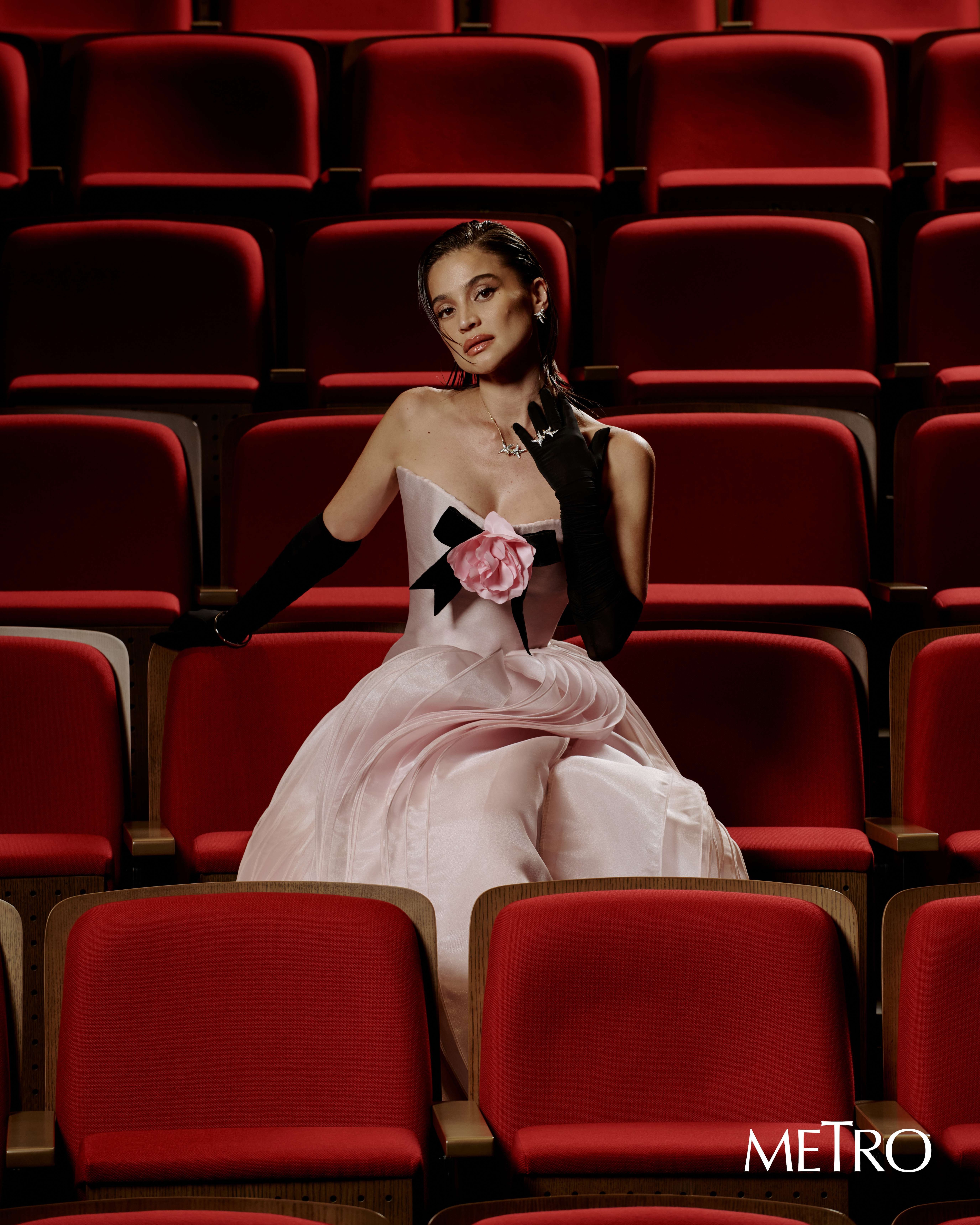 On Anne: Gown by Mark Bumgarner, gloves by Alex Perry, and jewelry by Tiffany & Co.
Chapter 2: Immersion
When the production finally began, the process was underscored by physical and mental immersion, fully dedicating themselves to a series that goes beyond entertainment. Like in the original material, incorporating hints of humor was a solution to finding a balance between raising awareness and entertaining. But the humor is distinctly Filipino, like that inside joke which references a dialogue from a movie of the iconic 90s loveteam of Marvin Agustin and Jolina Magdangal.
The fashion game was also strong; as someone who watched the K-drama, it was truly a delight for this author to see the memorable outfits worn by the Korean female lead reinterpreted, some with Filipino twists like the traditional terno. The outfits are part of the storytelling, and even in this aspect, nothing was random. “Mia was someone who was strong, bold, [and] emotionless. She just speaks her mind and has no care for other people’s feelings. And you can see that as a statement in her outfit. And then as she starts to heal and fall in love and find a family, you eventually see the texture of our fabrics getting softer, there’s more color, more feminine. So this was all intentional,” Anne gushes.
Aside from immersing herself in acting, getting back on the grind of shooting a teleserye (Anne’s last starring role in a series was in 2014 via Mars Ravelo’s Dyesebel), the fashion department was an area this style icon was very hands-on in. And in this storyline, there’s nothing superficial about the fashion because, initially, it serves as armor to shield her character and prevent others from seeing the pain haunting her, and then it morphs into a symbol of her freedom from her nightmares.
For Joshua, who admitted to not being well-informed on the topic of mental health, immersing himself in his character equipped him with a better understanding of this condition. As he brought his character to life, he also better understood his emotions, and that’s the effect and impact Joshua hopes their series will have on viewers.
Joshua opens up, “Actually, nu’ng ginawa ko ’to, ’yun ’yung bago sa’kin. Mental health. Hindi siya malinaw sa’kin before, bago ko siya gawin. And nu’ng nalaman ko about mental health, ’yung awareness about that, mas, I think, feeling ko mas nag-grow ako. Kasi mas naiintindihan ko ’yung sarili ko na, hindi ko alam na ako mismo, ’yung pinagdadaanan ako, ‘Ah, kaya pala ganito ako. Kaya pala ganyan ako.’ Parang nagkaroon ng term kung ano man ’yung nararamdaman ko.”
Actors are often asked about their similarity to the characters they portray. Joshua, like Patpat, tends to keep his emotions to himself. Patpat, who has carried the responsibility of caring for his older brother since they were young, prioritizes Matmat’s well-being over everything else. And because that’s the case, his own emotions take the backseat, with no one to talk to about his feelings.
“Kasi makimkimin akong tao. So akala ko okay lang na hindi mag-share. Naiipon pala siya. Eventually sasabog siya,” Joshua realizes. “Pero buti na nga lang, nandiyan ’yung acting, nand’yan ’yung work ko. Parang may outlet. Kumbaga may outlet ako ng nararamdaman ko, ng mga kinikimkim ko.” In Filipino slang, may hugot siya o may pinaghuhugutan siya, and that makes a big difference in portraying a character.
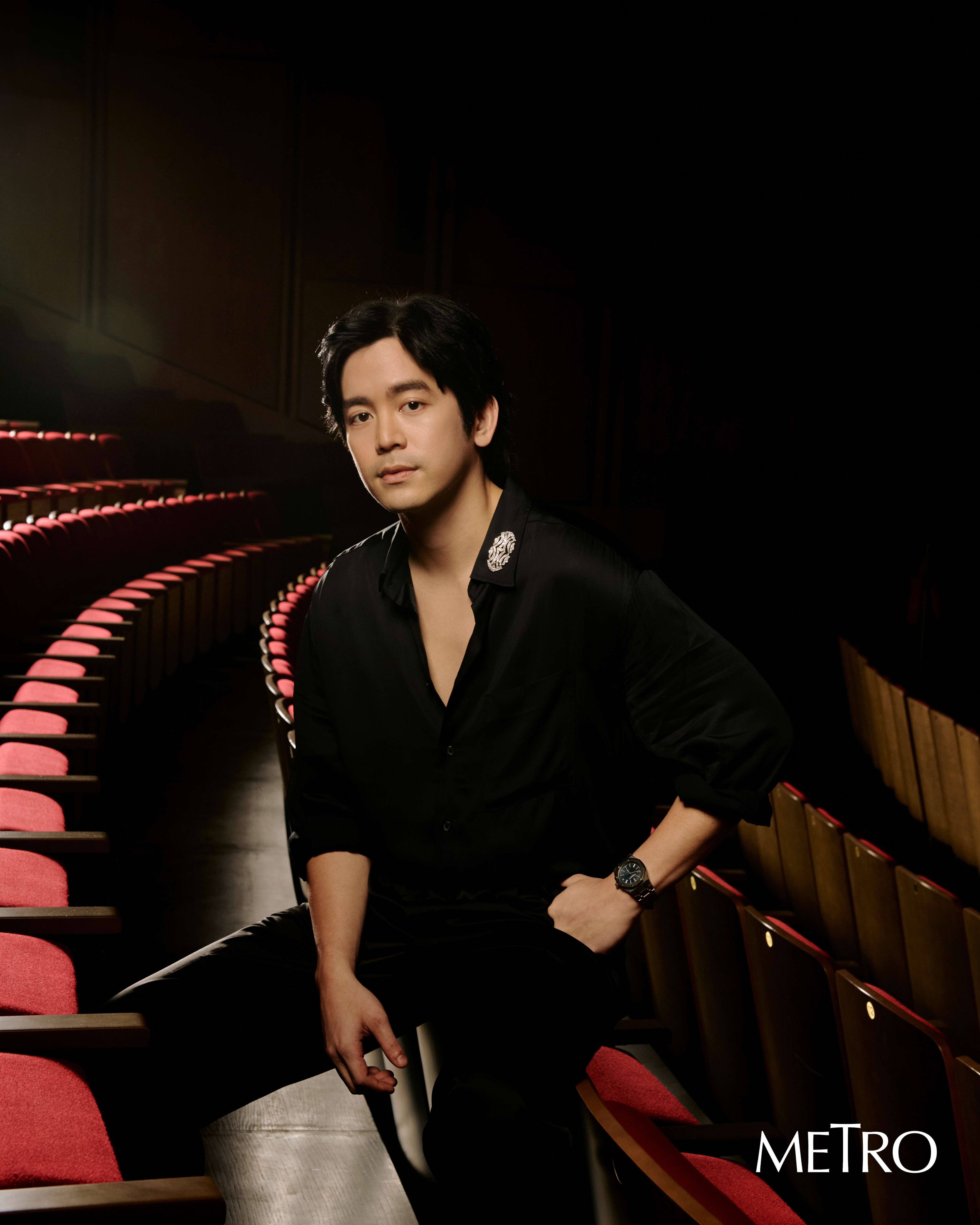
But, inarguably, Carlo’s immersion was on a different level. Playing a character on the spectrum is a first for him—he needed to learn about those with autism and absorb everything about them to make his portrayal plausible. “Nag-three-day immersion kami. Grabe, nag-workshop kami,” Carlo reveals, recalling the time he, Direk Mae, and acting coach Ana Feleo joined a school or NGO for children with autism.
“Every step of the way, kung paano maglakad si Matmat, kung paano tumakbo, kung paano ’yung hands. And napagusapan din namin na sa younger years ni Matmat, si Noel, nasa taas pa ’yung mga kamay niya. Nu’ng medyo nagka-edad na, bumaba na, mas na-control na ni Matmat. Tapos pinapanood ko rin si Noel, kung paano ’yung nuances niya. Inaral niya ko, inaral ko rin siya. Grabe ’yung dinala sa akin, ’yung binigay sa aking zen, ’yung binigay sa aking peace ni Matmat, ni Manong. Grabe. Every time na naalala ko, sobrang thankful ako sa series. Mahal na mahal ko sila, ’yung mga nakilala ko sa school,” Carlo fondly looks back.
Since Direk Mae joined Carlo in this immersion, she also had a newfound appreciation for the actor, his dedication, and his empathy. “He wasn’t observing from afar. He joined the class. During nap time, he was sleeping beside them. They were talking. So, he felt like one of them,” Direk Mae shares. “That’s why on set, it was very fresh to him because, I guess, it really made an impact on him too. He’s very empathetic. So, he felt for them, and he carried it throughout.”
Direk Mae feels honored to have worked with such brilliant actors as Anne, Carlo, and Joshua. Though all seasoned, she appreciated their flexibility and willingness to learn and adjust on set. She shares, “They’re excellent actors, na parang when they do the scenes, sometimes you can’t help na mapapanood ka… I would catch myself watching in awe because of the talent displayed.”
The same can be said about the rest of this star-studded cast. Each one of them—Agot Isidro, Maricel Laxa-Pangilinan, Rio Locsin, Michael de Mesa, Enchong Dee, Kaori Oinuma, Xyriel Manabat, Bianca de Vera, Louise Abuel, Alora Sasam, Francis Magundayao, Aljon Mendoza, Alyssa Muhlach, Mark Oblea, Ana Abad Santos, Meryll Soriano, Bodjie Pascua, and Edgar Mortiz—has had a significant contribution in getting the show’s message across.
”Lahat sila magagaling. Proud ako sa kanila,” Joshua remarks. With his character, he spent a lot of time with the abovementioned actors, whether in his scenes at work in OK Hospital or at home. The way he crafted his onscreen persona is partly reactive to the emotions he receives from his co-actors in a scene, and so he wants to give credit where it is due: ”Ang laking tulong nila sa akin. Sila ‘yung tumulong sa akin para mabuo ko rin ‘yung character ko.”
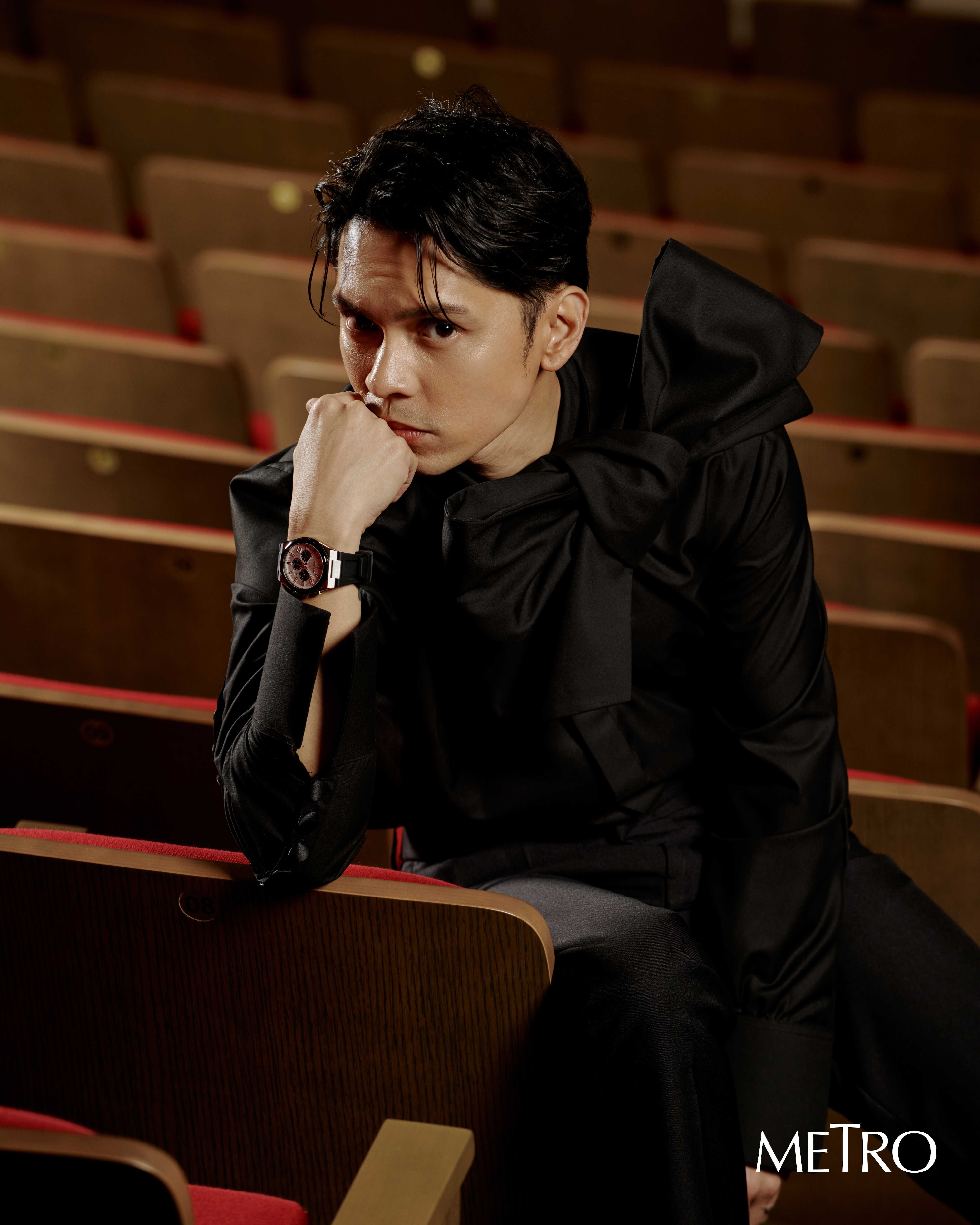 On Carlo: Top by Orias Studios and trousers by Chris Nick
Chapter 3: Inspiration
Back when Anne was contemplating taking on this project, she asked herself, “Will I be able to give it justice?” But then, after some thought, the question later changed: “What am I doing worrying about like, ‘Oh, are we going to give justice?’ Like, the whole point of this is reaching out to a wider audience, especially in the Philippines, where there’s still a stigma [about mental health], I would say.”
It is also for that reason that this project stands out for Joshua. It’s unlike anything he’s taken on before, and its message is loud and clear: It’s okay to not be okay. “Mas lumawak ’yung knowledge ko about mental health dahil kay Patpat, at mas naging aware ako kasi lahat tayo may mga pinagdadaanan, na hindi alam ng isa’t-isa,” Joshua mentions.
It’s a reminder to be kinder, something Carlo also emphasized. He noted that, as their series shows, we must not only extend understanding and love to those on the spectrum. Whether rich or poor, Carlo says, “Lahat may pinagdadaanan. Hindi lang sa utak, sa damdamin, sa kaluluwa. Lahat may sugat. At ’yun ’yung tina-tackle kasi nu’ng show e. Bawat individual, road to healing ’yan e. ’Pag may nang-cut sa’yo sa daan, huwag ka nang magalit. Let it pass. Malay mo, nagmamadali. ’Yung gano’n, ’yung maging mas empath ka, mas maging understanding sa bawat tao, ’di ba?”
It’s Okay to Not Be Okay is a deep source of inspiration. And as the series reaches its final chapter, the cast and crew hope the inspiring messages they shared live on in viewers’ hearts.
”I saw a video of a brother posting about his brother on the spectrum and how he was able to relate to Carlo’s character. So, you know, these little things make me feel like this was so worth doing,” Anne shares, grateful to those who expressed how much the series touched and moved them.
That brother also messaged Carlo and told him that his brother on the spectrum was a big fan of Manong. At the time, Carlo discovered that the person had passed away a couple of weeks ago. ”Sobrang nagpapasalamat sa akin na kahit papaano gumaan daw ‘yung exit [ng kapatid niya] dito sa world. Sobrang ‘yun ‘yung mga hinahawakan ko. More than the ‘sobrang galing mo,’ ‘sobrang husay mo‘… Mas ‘yung human connection. ‘Yung title, ‘di ba? It’s okay to not be okay.”
Comments like that make them feel proud. ”I’m really happy,” Joshua quips. ”Masaya ako para sa lahat and proud ako sa show namin.”
”It was a story worth telling,” Anne agrees, giving herself and the team a pat on the back. ”And it just brings me so much joy whenever we read the comments because we did a good job.”
News
Isang janitor ng ospital ang nakatagpo ng gusot na sulat mula sa isang pasyenteng kamakailan lang pumanaw — na naglalaman ng mga huling kahilingan at ang lokasyon kung saan itinago ang isang malaking halaga ng pera para sa batang naiwan.
Isang janitor ng ospital ang nakatagpo ng gusot na sulat mula sa isang pasyenteng kamakailan lang pumanaw — na naglalaman…
“Ang bonus ay 600,000, pero 600 lang ang natanggap ko — Binaligtad ng tawag ng CEO ang buong kumpanya!”
Ipinatawag ako ng CEO sa kanyang opisina. Nakalagay nang maayos ang aking resignation letter sa kanyang madilim na mesa na…

Totoo nga bang mas epektibo ang “bloodless” drug war ng administrasyong Marcos kumpara sa madugong kampanya noon ni dating Pangulong Duterte?
Bagong Estratehiya o Mas Matapang na Resulta? Ang Mainit na Debate sa Pagitan ng Marcos at Duterte Drug War sa…

Totoo na nga ba ang inaasam na ginhawa para sa ating mga lolo at lola dahil ngayong Abril 2026 ay kumpirmado na ang 10% pension hike mula sa SSS para sa lahat ng kasalukuyang pensyado
Ginhawa sa 2026: Ang Katotohanan sa Likod ng Inaasahang 10% SSS Pension Hike at ang Bagong Pag-asa ng mga Senior…

Totoo nga bang ang hakbang ng House Justice Committee sa mga impeachment complaint laban kay VP Sara Duterte ay pagtalima lamang sa mga panuntunan ng Korte Suprema?
Ang Impeachment Laban kay VP Sara Duterte: Isang Legal na Pagsusuri sa Pagtalima ng Kamara sa mga Panuntunan ng Korte…

Totoo nga bang may inaasahang dagdag na ₱500 sa pensyon ng mga SSS pensioners ngayong Abril 2026 para mabuo ang pangakong ₱1,000 increase?
Ang Ikalawang Tranche ng SSS Pension Hike ngayong Abril 2026: Katuparan ng Pangako o Panibagong Paghihintay para sa mga Senior…
End of content
No more pages to load