In the relentless theater of Philippine politics—where rumor, rhetoric, and revelation often collide—another controversy has erupted, threatening to engulf some of the country’s most recognizable political figures. At the center of the storm stands Senator Panfilo Lacson, a veteran lawmaker known for his disciplined persona and no-nonsense approach to governance. Opposite him are former soldiers, controversial whistleblowers, and allies of Rodolfo Marcoleta, who have reignited allegations so staggering in scale that they almost defy imagination: the alleged movement and delivery of ₱805 billion in public funds.
It is a number so colossal that it demands pause. ₱805 billion. To put it in perspective, that figure rivals the annual budgets of entire government departments. It dwarfs infrastructure allocations and social welfare programs. It is not the kind of sum that can quietly slip through bureaucratic cracks—at least not without leaving seismic tremors in its wake.
And yet, according to the accusers, that is precisely what happened.
The ₱805-Billion Question
The controversy traces back to claims reportedly made by a group of former Marines—some said to number over a hundred—who allege that they were involved in the physical handling and delivery of enormous sums of money connected to ghost projects and questionable transactions. The allegations are dramatic, cinematic even: suitcases filled with cash, movements facilitated by private vehicles, perhaps even aircraft, and a chain of command implicating powerful figures.
Senator Lacson, however, has publicly expressed deep skepticism.
He raised what he described as a logistical impossibility. If ₱805 billion were delivered in cash, he argued, even working 24 hours a day, it would take five years to complete such an operation. The process of lifting, counting, wrapping, and transporting that volume of money, he suggested, simply does not add up.
His implication was clear: the scale of the claim strains credulity.
But critics counter that the senator’s argument itself may be overly simplistic—or even intentionally dismissive.

Logistics in the Modern Age
In today’s Philippines, financial transactions do not resemble scenes from 19th-century trading posts. We are not in an era of carabaos hauling sacks of silver across muddy fields. The modern world moves differently.
Banks process billions daily using high-speed counting machines. Digital tracking systems coordinate transfers across cities in minutes. Logistics companies operate with fleets of vans, SUVs, helicopters, and even private aircraft. Cash-handling operations, when they occur, are often managed with precision, automation, and manpower that compress timeframes dramatically.
Critics of Lacson’s argument suggest that the senator’s hypothetical five-year calculation assumes a slow, manual process. But what if multiple teams operated simultaneously? What if advanced counting machines were used? What if transportation was not limited to a single vehicle but involved coordinated logistics?
The debate quickly shifts from “Is it possible?” to “Was it investigated thoroughly enough?”
Marcoleta Enters the Fray
Former lawmaker Rodolfo Marcoleta, never one to shy away from political confrontation, has reportedly urged that the matter be brought before the Senate Blue Ribbon Committee. He frames the issue not merely as a question of plausibility but of fairness and due process.
If allegations exist, he argues, they deserve scrutiny—not premature dismissal.
The Blue Ribbon Committee, after all, is designed to investigate anomalies in government transactions. Its purpose is not to judge guilt before hearings begin but to gather evidence, question witnesses, and allow the public to observe proceedings in the spirit of transparency.
Here lies the heart of the controversy: Should a Senate investigation proceed even if some senators believe the claims are exaggerated or implausible?
To supporters of Lacson, convening a hearing risks legitimizing what they consider propaganda or politically motivated noise. To critics, refusing to hold a hearing suggests bias—or worse, protection of powerful interests.
The Optics of Power
Politics is not merely about facts; it is about perception.
When a senior senator questions whether an allegation is “physically impossible,” he positions himself as a gatekeeper of reason. But in doing so, he also risks appearing dismissive of whistleblowers before they have testified.
This is particularly sensitive in the Philippines, where public trust in institutions has been repeatedly tested over decades. Every administration has faced accusations of corruption. Every major scandal has carried whispers of cover-ups and political maneuvering.
For some observers, Lacson’s remarks echo a broader pattern: powerful figures closing ranks when explosive claims surface.
For others, his stance represents prudence—an attempt to prevent the Senate from being weaponized as a stage for unverified accusations.
Ghost Projects and Political Shadows
The mention of “ghost projects” adds another layer of gravity. The Philippines has seen its share of infrastructure controversies: projects funded but never built, budgets allocated but never fully accounted for.
If ₱805 billion were indeed tied to such schemes, the implications would be staggering. It would represent not just corruption, but systemic failure on an extraordinary scale.
Yet as of now, no definitive evidence has been publicly presented that confirms such a massive transfer of funds. The allegations remain precisely that—allegations.
This tension between accusation and proof fuels the public debate.
A Question of Leadership
Lacson has long cultivated an image of discipline rooted in his background in law enforcement. He is known for budget scrutiny and outspoken positions against pork barrel practices. To his supporters, his skepticism reflects experience: extraordinary claims require extraordinary evidence.
But critics argue that leadership in 2026 demands openness to investigation, not rhetorical dismissal.
“Everyone deserves their day in court” is a phrase often invoked in legal contexts. In legislative investigations, the equivalent principle might be: everyone deserves to be heard.
Does convening a hearing dignify falsehoods—or does it reinforce democratic accountability?
That is the dilemma confronting the Senate.
The Role of Media and Social Platforms
The controversy has not unfolded quietly. Social media platforms have amplified every statement, every counterclaim, every emotional appeal. Content creators, vloggers, and commentators have framed the issue as a battle between truth-tellers and establishment figures.
They accuse “paid media” of silence. They urge viewers to “like and share.” They frame the story as suppressed information that powerful institutions refuse to release.
In the digital age, narrative spreads faster than evidence.
This dynamic complicates matters further. Lawmakers must respond not only to facts but to viral narratives that shape public perception in real time.
Bias or Balance?
Some critics go further, suggesting that Lacson appears protective of figures linked to Bongbong Marcos. They argue that refusing to pursue an inquiry signals partiality.
Supporters dismiss this as partisan rhetoric.
The truth may lie somewhere in between: political alliances inevitably color perceptions, whether or not they influence decisions.
In high-stakes controversies, neutrality is not just practiced—it must be seen.
The Mathematics of Doubt
Let us return to the number itself: ₱805 billion.
If delivered entirely in ₱1,000 bills, that would amount to 805 million individual notes. A single ₱1,000 bill weighs approximately one gram. That translates to roughly 805 metric tons of currency—if moved all at once.
But such calculations assume centralized handling. If distributed across teams and time, the scenario changes dramatically.
The logistical debate, then, is less about arithmetic and more about methodology.
Without access to documented evidence—bank records, transport logs, surveillance footage—both sides are left arguing hypotheticals.
Democracy’s Test
Ultimately, this controversy tests not only the credibility of specific individuals but the resilience of democratic processes.
Should skepticism preclude investigation?
Should sensational allegations automatically trigger hearings?
The Senate’s decision will signal how it balances caution with accountability.
If it investigates and finds nothing, it strengthens institutional trust.
If it refuses and evidence later surfaces, it risks eroding that trust irreparably.
The Public Watches
For ordinary Filipinos, the debate is not academic. ₱805 billion could fund hospitals, schools, disaster relief, and infrastructure across the archipelago. It represents opportunities lost—or potentially fabricated.
The emotional charge surrounding the issue reflects deep frustration with historical corruption and unmet promises.
People want clarity. They want transparency. They want proof.
The Road Ahead
As of now, no official Blue Ribbon hearing has resolved the matter. No court has issued findings. The allegations swirl in a space between possibility and improbability.
Senator Lacson stands by his skepticism. Marcoleta calls for investigation. Supporters and critics sharpen their arguments online.
In the coming weeks, pressure may mount for formal proceedings. Or the story may fade, replaced by the next political storm.
But one truth remains: in a democracy, questions do not disappear simply because they are inconvenient.
A Nation at a Crossroads
The Philippines has endured dictatorships, revolutions, economic crises, and democratic rebirths. It has navigated scandals that toppled administrations and controversies that reshaped institutions.
This latest firestorm—centered on ₱805 billion, former Marines, and a Senate chairman’s skepticism—may prove either a fleeting uproar or a defining test.
The difference will depend not on viral headlines but on evidence.
For now, the nation waits.
And in that waiting lies the essence of democracy: a demand that power answer questions, that accusations meet scrutiny, and that truth—however uncomfortable—eventually emerges.
News

Manny Pacquiao Has Something Bad to Do with Jillian Ward? Emman Bacosa Completely Deletes the Actress from His Life After Discovering That the Girl Has Another Man’s Attention!
In the world of showbiz and sports, it seems that nothing is more explosive than the news involving a Pacquiao…

HABANG LUMULUBOG ANG BAYAN SA TAAS-PRESYO… ISANG ARTISTA ANG GUMAWA NG HINDI INAASAHAN — ANG LIHIM NA DESISYON NI DONNY PANGILINAN NA NAGPAIYAK SA MGA DRAYBER AT NAGPA-ASA SA LIBO-LIBONG PILIPINO
Habang Lahat Nagtaas… Si Donny Pangilinan Nagbaba Para sa Tao. HABANG LUMULUBOG ANG BAYAN SA TAAS-PRESYO… ISANG ARTISTA ANG GUMAWA…

Viral Controversy Clarified: The Truth Behind the Alleged Incident Involving Jeric Raval and Kylie Padilla
In the fast-moving world of entertainment, where headlines are often driven by speculation and amplified by social media, it takes…

https://av.weeknews247.com/aviet/unang-panalo-nabuksan-ang-iran-blockade-balik-export-na-ang-iraq-at-saudi-sa-gitna-ng-matinding-tensyon-sa-strait-of-hormuz-at-krisis-sa-pandaigdigang-merkado-ng-langis/
In the ever-evolving world of Philippine entertainment, few on-screen partnerships have captured the imagination of fans quite like Kim Chiu…
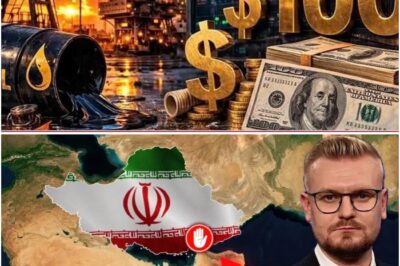
Unang Panalo! Nabuksan ang Iran Blockade: Balik Export na ang Iraq at Saudi sa Gitna ng Matinding Tensyon sa Strait of Hormuz at Krisis sa Pandaigdigang Merkado ng Langis
Sa gitna ng tila walang katapusang gulo at tensyon sa Gitnang Silangan, sa wakas ay may magandang balitang sumalubong sa…

Mula sa Bulwagan ng Senado Patungo sa Harapan ng Kalamidad: Nasaan na nga ba ang Maalamat na ‘Action Man’ na si Dick Gordon at Ano ang Kanyang Pinagkakaabalahan Ngayong 2026?
Sa mabilis na takbo ng pulitika sa Pilipinas, madaling makalimot ang publiko sa mga pangalang dati ay laging laman ng…
End of content
No more pages to load