In a nation long divided by politics, loyalty, and grief, a familiar voice has re-entered the public square — and this time, it carries the gravity of both law and conscience.
Former Chief Justice Maria Lourdes Sereno has delivered what many are calling a political thunderclap: a renewed and forceful assertion that former President Rodrigo Duterte and those who served under him must face accountability for alleged extrajudicial killings during the government’s war on drugs.
Her remarks have not only reignited debate — they have deepened it.
Because this time, she did not merely speak in generalities. She pointed to patterns. Documents. Inconsistencies. And what she described as evidence suggesting manipulation in official reports submitted to the courts.
Whether one sees her words as a courageous stand for justice or as a continuation of long-standing political conflict, one thing is certain:
The conversation has shifted.
The Weight of Authority
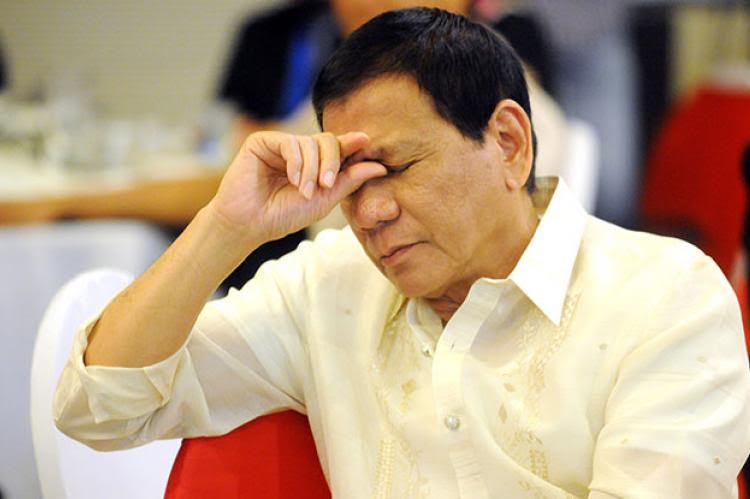
When a former chief justice speaks, the nation listens differently.
Sereno, who once presided over the highest court in the land, stated that during her tenure she personally reviewed documents related to killings associated with anti-drug operations. According to her account, what she observed went beyond isolated irregularities.
She described what she characterized as patterns — similarities across reports that suggested a systematic template rather than independent incidents.
One detail in particular has drawn attention: her claim that in multiple reports, firearms were allegedly placed in victims’ left hands, despite evidence suggesting many of those individuals were right-handed.
To critics of the drug war, this detail reinforces longstanding allegations of staged crime scenes — the so-called “nanlaban” narrative, in which suspects were said to have fought back against police officers.
To Duterte’s supporters, however, such claims are seen as speculative or politically motivated, demanding proof beyond anecdote.
The gravity lies not in rhetoric, but in documentation.
Sereno maintains that the Supreme Court waited for investigative reports from the Philippine National Police (PNP), but that the submissions revealed recurring similarities — patterns that raised red flags rather than resolved doubts.
The Role of Bato dela Rosa
In her remarks, Sereno also referenced former PNP Chief and now Senator Ronald dela Rosa, who led the police during the early stages of Duterte’s anti-drug campaign.
She cited statements attributed to him suggesting that full, in-depth investigations into each killing were not conducted at the time.
If accurate, that admission complicates the narrative.
Because without comprehensive investigations, determining whether force was justified becomes nearly impossible. And without independent review, accountability remains elusive.
Dela Rosa has consistently defended the drug war as a necessary measure to combat narcotics and criminality. He has rejected accusations of systematic abuse and has argued that police officers were acting within the law.
The clash between these positions is not merely political. It is philosophical.
What defines justice?
What constitutes sufficient oversight?
And how should a democracy balance security with human rights?
Manufactured Evidence or Misinterpretation?
Sereno’s most explosive suggestion was that evidence in certain cases may have been manufactured.
That is not a light allegation.
To suggest fabrication is to challenge the integrity of institutions tasked with upholding the law.
Yet her critics counter that identifying similarities in reports does not automatically prove orchestration. Law enforcement agencies, they argue, often use standardized reporting formats, which can create superficial uniformity.
The truth may hinge on forensic analysis, ballistics records, independent autopsies, and witness testimony — the very types of evidence now being examined by international investigators.
Enter the International Criminal Court
At the center of the storm stands the International Criminal Court (ICC).
The ICC has been conducting an investigation into alleged crimes against humanity connected to the Philippine drug war, focusing on incidents that occurred while the country was still a party to the Rome Statute.
Sereno emphasized that the ICC does not act impulsively. In her view, the mere fact that prosecutors moved forward indicates that preliminary assessments uncovered credible grounds for investigation.
Supporters of the ICC argue that it provides an impartial venue when domestic accountability mechanisms are perceived as insufficient.
Opponents maintain that the Court represents foreign intrusion into Philippine sovereignty, particularly since the country withdrew from the Rome Statute during Duterte’s presidency.
The legal debate over jurisdiction continues. But procedurally, the ICC asserts that it retains authority over alleged crimes committed during membership.
The Department of Justice and Interpol Cooperation
A further development has added complexity: statements from the Department of Justice suggesting that the Philippines would cooperate with Interpol if formally requested.
For years, such cooperation seemed unlikely. Now, even conditional openness signals a potential shift in tone.
Does this mean the government is softening its stance?
Or is it simply adhering to standard international law enforcement protocols?
Interpretations vary.
What is clear is that legal processes, once abstract, are becoming tangible.
The Political Backdrop
Sereno’s renewed statements cannot be divorced from history.
She was impeached and removed from office during Duterte’s presidency — a move her supporters labeled unconstitutional and politically driven. Since then, tensions between her and the Duterte camp have never fully dissipated.
Her critics argue that her current stance reflects lingering animosity.
Her defenders insist that her advocacy has been consistent since 2016, grounded in principle rather than personal grievance.
Intentions aside, her background gives her claims symbolic weight.
Because she is not speaking as an activist alone — but as a former head of the judiciary.
Justice for Whom?
Lost in legal technicalities are the families of thousands who lost loved ones during the anti-drug campaign.
Estimates of fatalities vary widely. Government figures report lower numbers tied directly to police operations. Human rights organizations cite significantly higher totals, including vigilante-style killings.
For grieving families, the debate is not theoretical.
It is personal.
Sereno framed her remarks not simply as legal commentary, but as a call for justice on behalf of those families.
Yet justice, in a polarized society, is rarely a unanimous concept.
For some Filipinos, justice means accountability for alleged abuses.
For others, justice means defending officers who risked their lives to curb crime.
Both perspectives stem from lived realities.
Faith in the Midst of Division
As with previous national controversies, religious language has surfaced prominently in public discourse.
Biblical passages about righteousness and truth are frequently invoked. Prayers are offered not only for victims, but for leaders across political divides — the Duterte family, the Marcos administration, lawmakers, and ordinary citizens alike.
Faith provides solace in uncertainty.
But it also challenges believers to confront uncomfortable truths.
“Blessed are those who hunger and thirst for righteousness,” reads Matthew 5:6.
The verse has been cited by commentators who see the current moment as a test of moral clarity.
Yet hunger for righteousness must coexist with respect for due process. Courts require evidence, not emotion. Investigations require documentation, not declarations.
Sovereignty and Accountability
At its core, the controversy is about the relationship between national sovereignty and international accountability.
Can a nation withdraw from a treaty and still be subject to its mechanisms for past actions?
Should international courts intervene when domestic systems appear divided?
What precedent does this set for future administrations?
These questions extend beyond Duterte. They shape how the Philippines will engage with global legal institutions in years to come.
A Nation at a Crossroads
Sereno’s statements have ensured that the issue remains far from settled.
Her words have energized critics of the drug war. They have angered staunch Duterte loyalists. They have compelled neutral observers to re-examine old assumptions.
Yet despite the intensity of public reaction, legal outcomes will not be determined by headlines or viral clips.
They will be determined by courts — domestic and international — weighing evidence methodically.
For Duterte and his allies, the path forward involves legal defense, jurisdictional challenges, and public advocacy.
For investigators, it involves gathering documents, interviewing witnesses, and constructing cases that meet stringent evidentiary standards.
For the Filipino people, it involves patience.
Beyond the Explosion
It is tempting to describe Sereno’s remarks as a “pasabog” — an explosion.
But perhaps they are something else.
Perhaps they are a reminder that the past does not disappear simply because political tides shift.
Accountability questions, once raised, rarely fade quietly.
Whether the ICC proceeds to trial.
Whether domestic courts intervene.
Whether evidence substantiates or refutes the allegations.
These outcomes remain uncertain.
What is certain is that the Philippines stands in a moment of reckoning — one that forces confrontation with complex truths about power, justice, and memory.
In the end, neither rhetoric nor prayer alone will resolve the matter.
Only evidence, law, and time will.
And as the nation watches, divided yet hopeful, the pursuit of truth continues — not in whispers, but in courtrooms where the final word belongs not to personalities, but to the rule of law.
News

A WEEK THAT SHOOK THE POLITICAL LANDSCAPE: Ceasefire Appeals From Risa Hontiveros Amid Middle East Hostilities, Oil Price Warnings From Lawmakers, and Mounting Questions Surrounding Benny Abante Over High-End Watches — Governance, Optics, and Electoral Undercurrents Now Intertwine as 2028 Slowly Approaches.
In the ever-unpredictable theater of Philippine politics, where headlines shift as quickly as alliances, two narratives collided this week: a…

HEARTBREAKING MOMENT ON THE HOT SEAT: Rufa Mae Quinto SHARES HER FRUSTRATION OVER HER HUSBAND FOR THE FIRST TIME IN KARNA DAVILA’S TALKSHOW!
Heartbreaking Moment on the Hot Seat: Rufa Mae Quinto Opens Up About Personal Struggles for the First Time on Karen…
SECRETS JUST REVEALED – WHO WILL “YARE” AFTER THIS SHOCKING REVELATION?
Secrets Just Revealed – Who Will Be Affected After This Shocking Disclosure? A wave of intense public discussion has erupted…
LUISTRO AND ABANTE NAMED: THE PARLIAMENTARY CONFRONTATION IS HEATER THAN EVER!
Luistro and Abante Named: Parliamentary Confrontation Intensifies Amid Public Scrutiny The political atmosphere has grown increasingly tense following recent developments…

SHOCKING NEWS FROM MORONG: Two Missing Friends Found at Cemetery in Morong, Rizal – The Truth Leaves Public Shock!
Shocking News from Morong: Two Missing Friends Found at Cemetery in Morong, Rizal – A Community Seeks Clarity Residents of…

KAKAPASOK LANG: HOUSEMATES PBB COLLAB 2.0 “BATTLE” IN THE POOL AFTER THE PARTY NIGHT!
Just In: PBB Collab 2.0 Housemates “Battle” in the Pool After Party Night – A Playful Moment Fans Can’t Stop…
End of content
No more pages to load