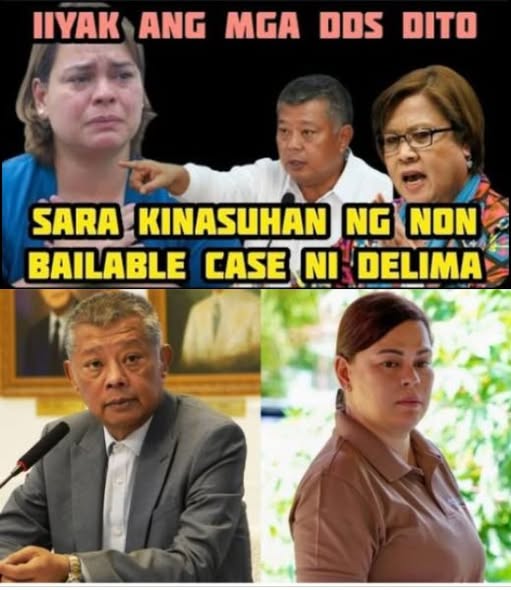
The Philippine political landscape has entered a period of extreme tension following the filing of a non-bailable plunder and malversation complaint against Vice President Sara Duterte before the Office of the Ombudsman. This development is far more than another political skirmish—it represents a decisive escalation that drags the long-running controversy over confidential and contingent funds out of congressional hearings and into the unforgiving realm of criminal prosecution.
At stake are accusations that carry the gravest legal consequences under Philippine law. Plunder and malversation are not symbolic charges; they threaten imprisonment, forfeiture of assets, and irreversible political fallout. What began months ago as questions about budget transparency has now evolved into a legal confrontation that could redefine the balance of power and accountability at the highest levels of government.
From Budget Questions to Criminal Liability
For much of the past year, the issue of Confidential Funds (CF) has hovered ominously over the administration. Initially framed as a technical budget concern, the issue soon ignited public outrage and demands for transparency. Legislative inquiries stalled, political defenses hardened, and accountability mechanisms appeared to hit a wall.
That stalemate shattered when a broad coalition—composed of civil society leaders, religious figures, lawyers, and political activists—formally brought the matter before the Ombudsman. Their decision to pursue a non-bailable criminal case fundamentally changed the stakes. Unlike political remedies that rely on votes and alliances, this legal route places the Vice President directly under the authority of an independent constitutional body with prosecutorial powers.
If probable cause is found, the Vice President could face detention while the case proceeds—an extraordinary scenario for a sitting national official.
The Legal Weight of Plunder and Malversation
The complaint accuses Vice President Duterte of Plunder, Malversation of Public Funds, Graft, and Bribery. Under Philippine law, plunder is among the most serious crimes a public official can face. It involves the accumulation of ill-gotten wealth through a series of illegal acts using public funds, and it is often classified as non-bailable due to its severity.
Malversation, meanwhile, centers on the alleged misuse or misappropriation of funds entrusted to a public official. Together, these charges form a powerful legal framework that does not merely question administrative judgment—it alleges criminal intent and abuse of authority.
The complainants argue that criminal prosecution is now unavoidable, especially after political processes failed to deliver meaningful accountability.
The P625 Million Firestorm
At the heart of the complaint lies the controversial handling of ₱625 million in Confidential Funds, split between two major allocations.
The first involves ₱125 million transferred to the Office of the Vice President in 2022. Records indicate that this enormous amount was spent in just eleven days, averaging more than ₱11 million per day. Contingent and confidential funds are designed for unforeseen, sensitive operations and require strict justification. The speed and scale of the expenditure immediately raised red flags about legality, necessity, and compliance with fiscal rules.
The second—and larger—allocation involves ₱500 million granted to the Department of Education, which the Vice President also heads. Confidential funds are traditionally associated with intelligence, security, and surveillance activities. Their use within the education sector triggered widespread confusion and alarm.
During legislative hearings, explanations surfaced suggesting that the funds were used for activities such as transportation assistance, tree-planting, and feeding programs. While these initiatives may be socially beneficial, critics argue that channeling confidential funds toward such purposes violates both the intent and safeguards governing their use.
The Missing ₱15 Million and Military Links
Adding to the controversy was testimony concerning a ₱15 million allocation allegedly meant for a youth seminar and reportedly sourced from the Armed Forces of the Philippines (AFP). What intensified concern was the claim that the funds were not disbursed through standard financial officers but allegedly handled by members of the Vice President’s security detail.
Reports that the AFP confirmed the origin of the funds further deepened the crisis. Questions surrounding the chain of custody, documentation, and final disposition of the money remain unresolved, making the issue one of the most damaging elements of the complaint.
Why the Ombudsman Changes Everything
The decision to file the case before the Office of the Ombudsman is pivotal. As a constitutionally independent institution, the Ombudsman is empowered to investigate and prosecute high-ranking officials without political interference. Unlike congressional inquiries, its authority cannot be blocked by partisan alliances.
Equally significant is the Ombudsman’s power to pierce the Bank Secrecy Law in cases involving graft and corruption. This authority allows investigators to examine bank accounts without the consent of the account holder—an extraordinary exception designed to uncover hidden financial trails.
For years, public speculation has surrounded the true extent of the Duterte family’s wealth. Allegations linking funds to questionable sources have circulated, but financial scrutiny stalled due to the absence of waivers. An Ombudsman-led investigation could now forcibly open those accounts, potentially confirming or disproving long-standing claims through documented financial evidence.
A Coalition Driven by Moral Outrage
The complainants behind the case represent a powerful moral and civic alliance. Their ranks include religious leaders, human rights advocates, and political figures who argue that the Confidential Funds issue is not merely technical—it is a profound betrayal of public trust.
Their involvement signals that the controversy has moved beyond party politics. It has become a national reckoning over how public money is used, who is held accountable, and whether power can still be checked by law.
Political Shockwaves and Uncertain Alliances
The filing of a non-bailable case has sent tremors through the political establishment. Observers note signs of growing isolation around the Vice President, raising questions about how long political allies will remain steadfast once legal consequences become unavoidable.
The case also casts a shadow over other figures linked to past controversies, fueling speculation about whether political protection will endure under mounting legal pressure. History suggests that when criminal liability becomes imminent, alliances often fracture.
A Defining Moment for Accountability
The nation now awaits the Ombudsman’s determination of probable cause—a decision that could reshape Philippine politics overnight. More than the fate of one official is at stake. The outcome will test whether the country’s anti-corruption institutions possess the strength and independence to confront power without fear.
If the case proceeds, it will mark one of the most consequential accountability battles in modern Philippine history. For a public weary of unanswered questions and stalled investigations, the possibility that financial secrets may finally be exposed represents both hope and reckoning.
The question now is no longer whether the controversy will fade—but whether the truth, once pursued by the full force of the law, can be contained at all.
News

ISANG BATANG YAGIT ANG HULI SA AKTO NG PAGNANAKAW SA MADULAS NA PALENGKE NG DIVISORIA NA NAGDULOT NG TENSYON NANG KALADKARIN SIYA NG KINATATAKUTANG GWARDYA, NGUNIT ANG LIHIM NA PAGSUNOD NG ISANG TINDERO AY MAGBUBUNYAG NG KAKAIBANG ANYO NG HUSTISYA
Isang batang magnanakaw ang nahuli sa abalang pagnanakaw sa maingay na pamilihan ng Divisoria, na lumikha ng tensyon habang kinakaladkad…

Manny Pacquiao Has Something Bad to Do with Jillian Ward? Emman Bacosa Completely Deletes the Actress from His Life After Discovering That the Girl Has Another Man’s Attention!
In the world of showbiz and sports, it seems that nothing is more explosive than the news involving a Pacquiao…

HABANG LUMULUBOG ANG BAYAN SA TAAS-PRESYO… ISANG ARTISTA ANG GUMAWA NG HINDI INAASAHAN — ANG LIHIM NA DESISYON NI DONNY PANGILINAN NA NAGPAIYAK SA MGA DRAYBER AT NAGPA-ASA SA LIBO-LIBONG PILIPINO
Habang Lahat Nagtaas… Si Donny Pangilinan Nagbaba Para sa Tao. HABANG LUMULUBOG ANG BAYAN SA TAAS-PRESYO… ISANG ARTISTA ANG GUMAWA…

Viral Controversy Clarified: The Truth Behind the Alleged Incident Involving Jeric Raval and Kylie Padilla
In the fast-moving world of entertainment, where headlines are often driven by speculation and amplified by social media, it takes…

https://av.weeknews247.com/aviet/unang-panalo-nabuksan-ang-iran-blockade-balik-export-na-ang-iraq-at-saudi-sa-gitna-ng-matinding-tensyon-sa-strait-of-hormuz-at-krisis-sa-pandaigdigang-merkado-ng-langis/
In the ever-evolving world of Philippine entertainment, few on-screen partnerships have captured the imagination of fans quite like Kim Chiu…

Unang Panalo! Nabuksan ang Iran Blockade: Balik Export na ang Iraq at Saudi sa Gitna ng Matinding Tensyon sa Strait of Hormuz at Krisis sa Pandaigdigang Merkado ng Langis
Sa gitna ng tila walang katapusang gulo at tensyon sa Gitnang Silangan, sa wakas ay may magandang balitang sumalubong sa…
End of content
No more pages to load