Debt, Leadership, and Public Memory:
How Fiscal Legacies Shape the Debate Over the Philippines’ Political Future
In every democracy, economic memory plays a powerful role in shaping political choices. Voters do not assess leaders only by speeches or personalities, but by what is left behind—budgets, obligations, and long-term consequences that affect daily life. In the Philippines, discussions about public debt, fiscal management, and leadership continuity have once again returned to the center of national conversation.
At the heart of the debate lies a fundamental question: How should citizens evaluate past administrations when deciding the country’s future direction? Closely tied to this question is another, equally sensitive one: Should political leadership be passed within families when public trust remains divided over past economic outcomes?
This article explores these issues through a calm examination of fiscal policy legacies, contrasting public perceptions of previous administrations, and the concerns that arise when voters consider continuity versus change.
Public Debt as a Measure of Governance
Public debt is not inherently negative. Governments borrow to fund infrastructure, social services, healthcare, education, and economic recovery during crises. What matters most is how debt is used, how transparent it is, and how sustainable it remains for future generations.
In the Philippines, public discourse often links debt levels to leadership performance. Citizens understand that debt incurred today does not disappear with a change of administration—it becomes a shared responsibility, paid through taxes, reduced spending flexibility, or delayed development priorities.
This understanding explains why debt remains an emotionally charged topic.
The End-of-Term Question: Why Timing Matters
One recurring point in public discussions is the timing of large-scale borrowing. When significant loans are secured near the end of an administration, concerns naturally arise.
Critics ask:
Why were these loans necessary at that specific moment?
Were they fully allocated to productive projects?
How much burden would be carried by the next administration and, ultimately, by ordinary citizens?
Supporters respond that economic conditions, global pressures, and emergency needs often require decisive action, regardless of political calendars.
The tension between these views reflects a deeper issue: trust in long-term planning.
Comparing Fiscal Transitions Between Administrations
Public memory frequently contrasts different transitions of power. One comparison often raised involves an administration remembered for leaving relatively strong fiscal reserves versus another perceived to have expanded borrowing significantly.
From a public perspective, such contrasts are simplified into narratives:
One administration is associated with financial restraint and preparedness.
Another is associated with heavy borrowing and long-term obligations.
While economic realities are more complex than these summaries suggest, perceptions matter. They influence how citizens interpret present conditions and future promises.
The Burden Shared by Citizens
Regardless of political affiliation, one fact remains unchanged: public debt is ultimately carried by the population.
Citizens feel its impact through:
Tax policies
Government spending priorities
Interest payments that limit funds for social services
Reduced flexibility in responding to future crises
This shared burden explains why fiscal discussions often evoke strong emotional responses. For many families, economic stability is not an abstract concept—it directly affects food prices, transportation costs, healthcare access, and education opportunities.
Political Families and Economic Accountability
The debate becomes more intense when leadership appears to remain within a single political family. While political dynasties are not unique to the Philippines, they raise recurring concerns about accountability and continuity.
Supporters argue that:
Experience and familiarity can ensure stability
Family members should be judged independently
Leadership skills are not inherited automatically, but developed
Critics counter that:
Political power concentrated within families reduces competition
Past governance records influence public trust
Continuity may repeat unresolved economic patterns
Neither position is inherently unreasonable. The disagreement lies in how much weight voters assign to historical outcomes.
Fear of Repetition Versus Hope for Reform
One of the most common anxieties expressed by voters is the fear that economic challenges may worsen if leadership follows familiar paths. This fear is not necessarily directed at individuals, but at systems and patterns.
Questions often raised include:
Will fiscal discipline improve or decline?
Will borrowing be strategic or excessive?
Will transparency increase or diminish?
At the same time, others argue that new leadership—even within familiar circles—can introduce reforms, adapt lessons from the past, and govern differently.
This tension reflects a broader democratic dilemma: how to balance skepticism with openness.
Evaluating Leaders Beyond Personality
Economic governance cannot be reduced to charisma or rhetoric. Sustainable leadership requires:
Clear fiscal frameworks
Transparent budgeting
Long-term development planning
Institutional checks and balances
Voters increasingly demand substance over symbolism. They want to know not just who a leader is, but how policies will affect public finances over time.
This demand for clarity is a sign of political maturity rather than cynicism.
The Role of Memory in Democratic Choice
Public memory is selective. Certain events are remembered vividly, while others fade. In fiscal matters, what tends to endure is the outcome, not the process.
When people recall:
Rising prices
Increased obligations
Limited public services
They associate these experiences with leadership decisions, even if global or structural factors also played a role.
Democracy depends on this memory, imperfect as it may be. It serves as a mechanism of accountability.
The Importance of Context in Economic Judgment
It is equally important to acknowledge context. Economic conditions differ from one administration to another due to:
Global economic cycles
Natural disasters
Health emergencies
International market shifts
Judging any leadership without context risks oversimplification. Responsible discourse requires acknowledging both internal decisions and external pressures.
Balanced evaluation strengthens, rather than weakens, democratic debate.
Transparency as the Foundation of Trust
Across political divisions, one principle consistently earns public support: transparency.
Citizens are more willing to accept difficult economic realities when:
Borrowing decisions are clearly explained
Funds are visibly allocated to public benefit
Oversight mechanisms are respected
Where transparency is weak, suspicion grows—even in the absence of wrongdoing.
Thus, trust is not built through promises alone, but through open governance.
The Next Generation of Voters
Younger voters, in particular, express concern about long-term debt. They understand that obligations created today will shape their opportunities tomorrow.
This generation asks:
Will public resources support innovation and education?
Will economic policy prioritize sustainability?
Will leadership be accountable beyond election cycles?
Their voices increasingly influence political outcomes.
Continuity Is Not the Same as Inevitability
One important clarification often overlooked in heated debates is this: political continuity does not guarantee identical outcomes.
Leadership choices, advisory teams, institutional strength, and public pressure all shape governance. However, continuity does increase scrutiny. Voters naturally compare what was promised before with what was delivered.
This scrutiny is not hostility—it is democratic responsibility.
Civic Engagement Beyond Partisan Lines
The debate over debt and leadership should not be reduced to loyalty or opposition. Economic questions affect everyone, regardless of political preference.
Constructive civic engagement means:
Asking difficult questions respectfully
Demanding data instead of slogans
Evaluating policies rather than personalities
Such engagement strengthens institutions and discourages complacency.
Learning From the Past Without Being Trapped by It
History offers lessons, not verdicts. The challenge for voters is to learn from previous outcomes without becoming imprisoned by them.
Healthy democracies:
Remember past mistakes
Recognize past achievements
Allow room for improvement
Insist on accountability
This balance prevents both blind loyalty and permanent distrust.
Conclusion: The Responsibility of Choice
The Philippines stands, as it often does, at a crossroads shaped by memory, economics, and hope. Debates over debt, leadership, and political continuity are not signs of division—they are signs of engagement.
Whether citizens favor continuity or change, one principle should guide the discussion: the long-term well-being of the nation.
Debt will be paid not by administrations, but by people. Leadership will be judged not by lineage, but by outcomes. And democracy will endure only if voters continue to question, evaluate, and choose with both reason and responsibility.
In the end, the future of the country does not belong to any single family or figure. It belongs to the people who carry its obligations—and its hopes—forward.
News
Nang Makakuha ng 684 Points ang Anak Ko, Pinilit ng Biyenan Kong Baguhin ang College Choice Niya Para Makapasok ang Pinsan Niyang Babae—Hindi Nila Alam, Sa Buhay na Ito, Hindi Ko Na Hahayaang Mamatay ang Pangarap ng Anak Ko
Noong makita ko ulit ang biyenan kong nakatayo sa pintuan ng kuwarto ko, hawak ang isang mangkok ng mainit na…
Tinanggihan Ko ang Anak ng Mag-asawang Nagnakaw ng Pangarap Ko Noon—Akala Nila Isa Lang Akong Admissions Officer, Hanggang Buksan Ko ang Lumang Folder na Sisira sa Kanilang Buong Pamilya
Tinanggihan ko ang pinakamatalinong aplikante sa buong probinsya. Hindi dahil mababa ang grades niya. Hindi dahil pangit ang sagot niya…

Tinawag Akong “Anak sa Labas” sa Kindergarten… Pero Nang Iwan Kami ni Papa sa Ballroom Habang Duguan Ako, Dumating ang Lihim na Pamilya ni Mama at Binawi ang Pangalan na Inagaw sa Amin
Tinawag akong “anak sa labas” ng kaklase ko sa kindergarten. Hindi ko pa alam noon kung gaano kabigat ang salitang…
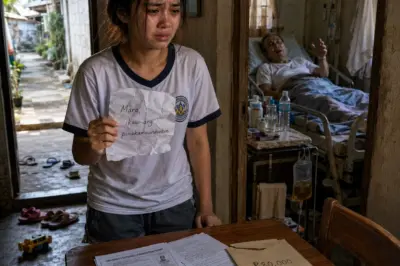
Pitong Araw Bago ang Entrance Exam, Iniwan Ako ni Mama Kasama ang Tatay Kong Nakahiga sa Kama… Pero Sa Buhay na Ito, Hindi Ko Na Isasakripisyo ang Sarili Ko Para sa Kanila
Pitong araw bago ang pinakamahalagang entrance exam ng buhay ko, tumakas ang nanay ko. Hindi siya nawala dahil may emergency….
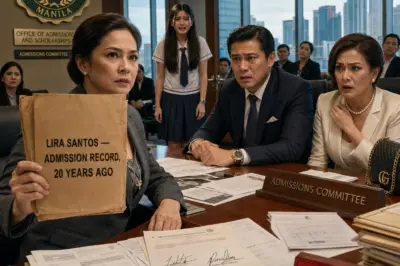
Tinanggihan Ko ang Anak ng Mag-asawang Nagnakaw ng Pangarap Ko Noon—Akala Nila Pera at Donasyon ang Katapat ng Katahimikan, Hanggang Ilabas Ko ang Lumang Admission Letter na Dalawampung Taon Kong Itinago
Tinanggihan ko ang pinakamatalinong aplikante sa buong rehiyon. Hindi dahil bagsak siya. Kundi dahil anak siya ng dalawang taong nagnakaw…

Tinawanan Niya Ang Magaspang Kong Kamay Sa Harap Ng Barkada Niya… Pagkalipas Ng Walong Taon, Tinawag Niya Akong “Patay Na Patay Pa Rin” Sa Isang Pustahan—Pero Hindi Niya Alam Na Iyon Ang Huling Araw Na Magmamakaawa Ako
Noong unang taon naming magkasama, hawak ni Caleb Villamor ang kamay ko sa likod ng resort ng pamilya nila sa…
End of content
No more pages to load